How to Cook Bacon in the Oven
Make crisp, evenly cooked oven bacon at 400°F, with timing by thickness, pan setup options, draining tips, and safe bacon-fat storage.
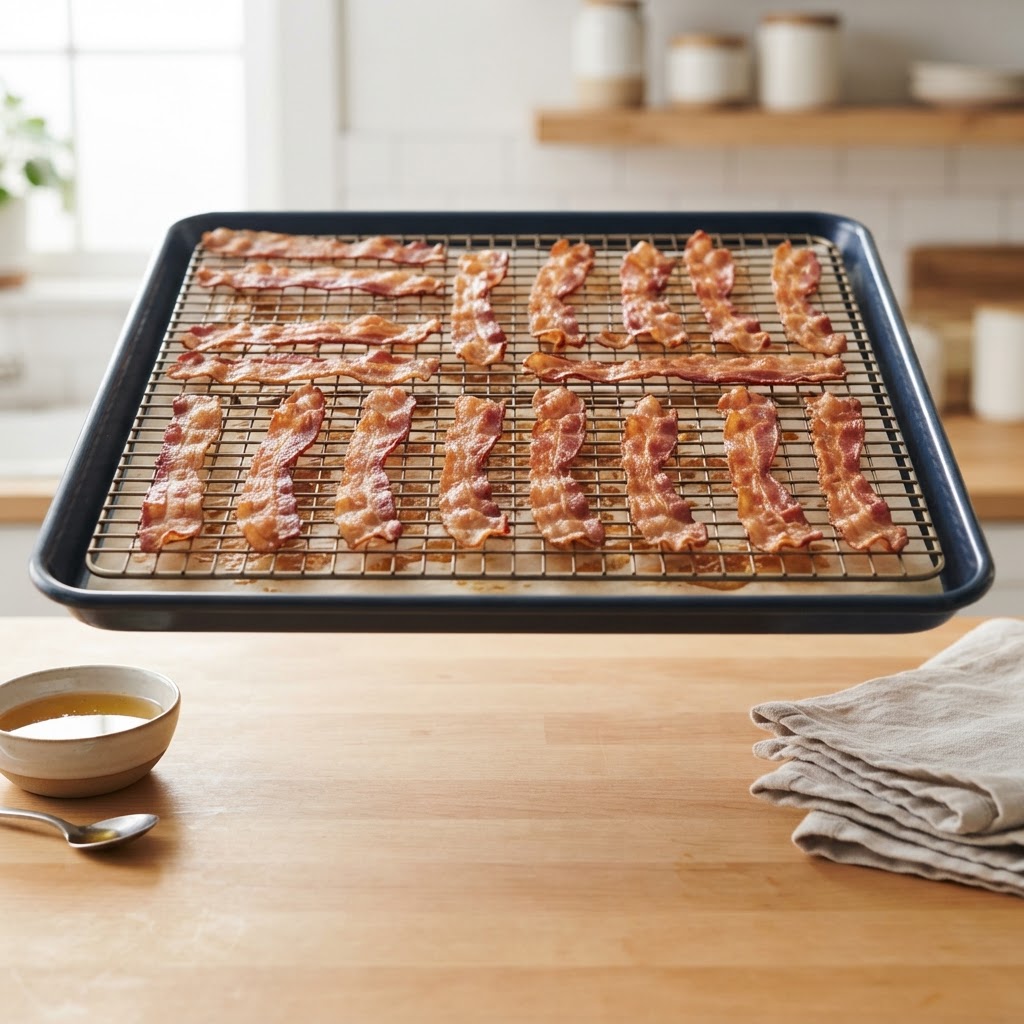
Quick reference
- Oven temperature: 400°F Use a conventional oven setting
- Thin bacon: 15–18 minutes Start checking at 12 minutes
- Regular-cut bacon: 18–22 minutes Check near the lower end
- Thick-cut bacon: 22–25 minutes May need a little longer
- Pan setup: Foil or parchment Rack is optional
Set up the pan
Heat the oven to 400°F. Line a rimmed baking sheet with foil or parchment for easier cleanup, then arrange the bacon in a single layer. The slices can be close together, but they should not overlap. A rimmed sheet is important because bacon releases hot fat as it cooks.
- Use foil for the easiest cleanup.
- Use parchment when you want a gentler nonstick surface.
- A rack is optional, not required.
Choose a flat pan or rack
For most home cooks, baking bacon directly on the lined sheet gives flavorful slices that cook in their rendered fat. For bacon that is less greasy and especially crisp underneath, set a wire rack over the lined sheet and place the slices on top. Make sure the rack fits securely and has openings small enough to support the bacon.
- Directly on the pan: simpler and easier to clean.
- On a rack: better airflow and less contact with fat.
- Do not crowd the slices.
Bake and start checking early
Place the pan in the oven and bake until the bacon reaches your preferred crispness. Thin slices usually take about 15–18 minutes, regular-cut bacon about 18–22 minutes, and thick-cut bacon about 22–25 minutes. Ovens, pans, and brands vary, so begin checking early—especially around 12–15 minutes. Bacon crisps further as it cools.
- No need to turn the bacon.
- Add a few minutes for softer or thicker slices.
- Watch closely near the end; browning accelerates quickly.
Drain and serve
Transfer the cooked bacon to a paper towel-lined plate with tongs. Let it drain briefly before serving. If you want consistent pieces for sandwiches, salads, or breakfast plates, cut or crumble the bacon after it has cooled for a minute. Pouring off excess pan fat while it is still warm can make cleanup easier, but handle the hot sheet carefully.
- Drain on paper towels for a cleaner finish.
- Do not pour hot bacon fat down the sink.
- Let the pan cool before washing.
Save bacon fat safely
If desired, strain the warm fat through a fine-mesh strainer into a clean, heatproof container to remove browned bits. Let it cool briefly, cover it, and refrigerate it rather than leaving it at room temperature. Use a small amount for cooking vegetables, eggs, or savory dishes, and discard it if it develops an off smell or appearance.
- Use a labeled, covered container.
- Refrigerate promptly after it cools.
- Never seal extremely hot fat in a fragile container.