How to Convert a Soup Recipe to the Slow Cooker
Convert a stovetop soup in minutes: reduce liquid, layer ingredients by cooking time, and add pasta, dairy, or greens near the end.
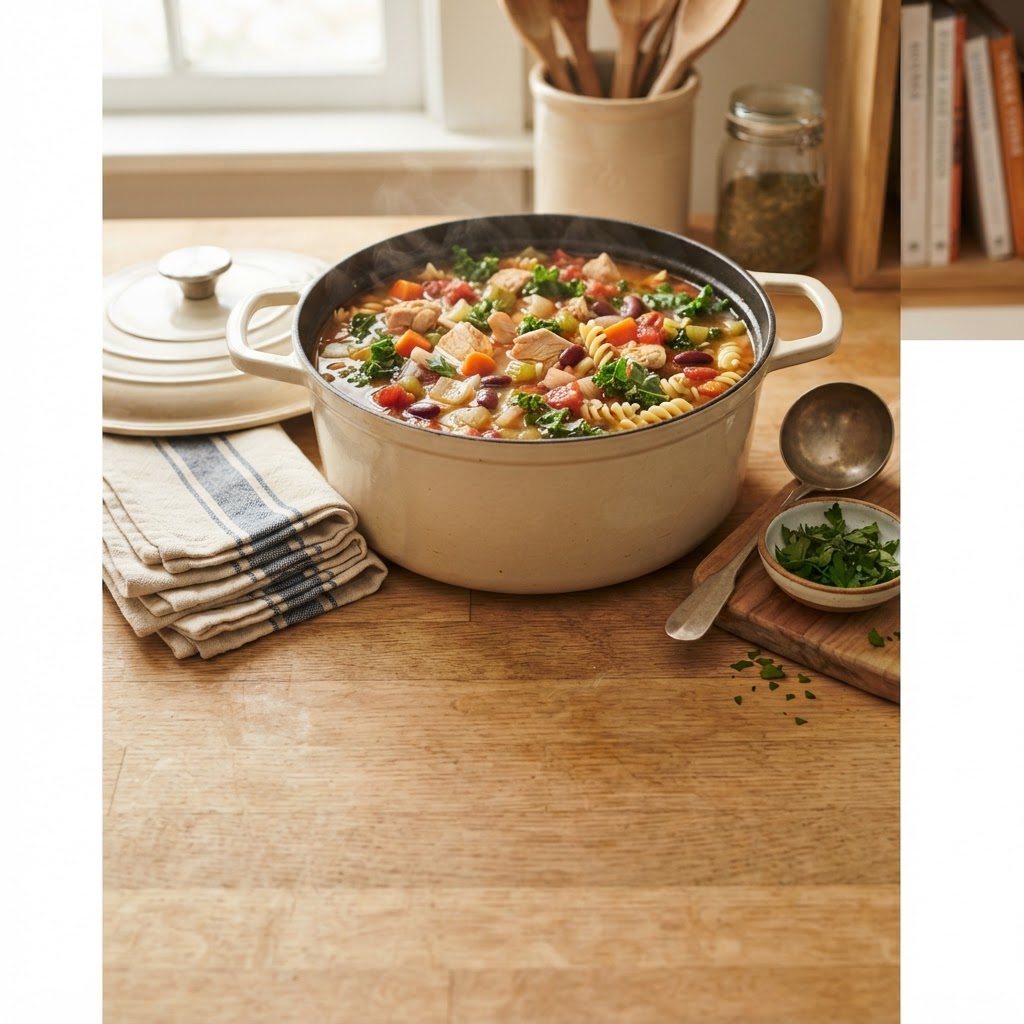
Quick reference
- Liquid: Reduce by 15–25% Start conservatively; add more later.
- Low setting: About 6–8 hours Best for sturdy vegetables and meats.
- High setting: About 3–4 hours Appliances vary.
- Late additions: Final 15–30 minutes Use for pasta, dairy, and greens.
Start with less liquid
To convert a soup recipe to the slow cooker, reduce the broth or water by roughly 15–25 percent. A covered slow cooker loses far less liquid than an uncovered pot, while meat and vegetables release some of their own. Keep enough liquid to surround the ingredients, but do not drown them. You can stir in extra hot broth near the end if the soup is thicker than intended.
Build flavor before loading
Browning is optional, but it matters when the recipe depends on deeply flavored meat, onions, garlic, or mushrooms. Sear meat and soften aromatics in a skillet, then scrape the browned bits into the cooker with a little broth. For a simpler weeknight version, add everything directly; the soup will still work, but its flavor may be lighter and less rounded.
- Brown beef, sausage, or chicken when practical.
- Soften onions or garlic if they are central to the recipe.
- Do not brown ingredients that will be added late.
Layer ingredients by cooking time
Put sturdy vegetables and ingredients that need the longest cooking at the bottom or near the heat source. Add potatoes, carrots, dried beans that have been properly prepared, and raw meat first. Place quicker-cooking vegetables higher up. Cut ingredients into similar pieces so they finish at roughly the same time, and avoid lifting the lid repeatedly because it slows cooking.
- Early: potatoes, carrots, celery, onions, raw meat.
- Later: zucchini, peas, fresh herbs, and delicate vegetables.
- Keep ingredients mostly submerged, but do not overfill the cooker.
Add delicate ingredients late
Pasta, dairy, leafy greens, seafood, and fresh herbs usually need a short final cooking window. Add pasta during the last 15–30 minutes, checking it before it becomes soft; it continues absorbing broth as it sits. Stir in cream, milk, cheese, or yogurt near the end to reduce the chance of splitting. Add greens in the final few minutes so they stay bright and retain some texture.
- For very tender pasta, cook it separately and add it to each bowl.
- Add seafood only when the base is nearly finished.
- Stir dairy in with the cooker on low or warm, if possible.
Finish, test, and store safely
Season at the end, after the broth has reduced slightly and the ingredients have contributed their flavor. Taste for salt, pepper, acidity, and herbs; adjust with small additions rather than relying on the original stovetop measurements. Check meat with a thermometer: poultry should reach 165°F/74°C, while ground meat should reach 160°F/71°C. Refrigerate cooked soup within 2 hours and use it within 3–4 days; reheat leftovers to 165°F/74°C.
- If the soup is thin, leave the lid ajar briefly while finishing on the stovetop.
- If it is too thick, loosen it with hot broth or water.
- Cool leftovers in shallow containers for faster chilling.