How to Char Vegetables Without Burning the Outside
Get smoky, dark vegetable edges without a bitter crust by drying surfaces, sizing pieces evenly, and matching heat to each cooking method.
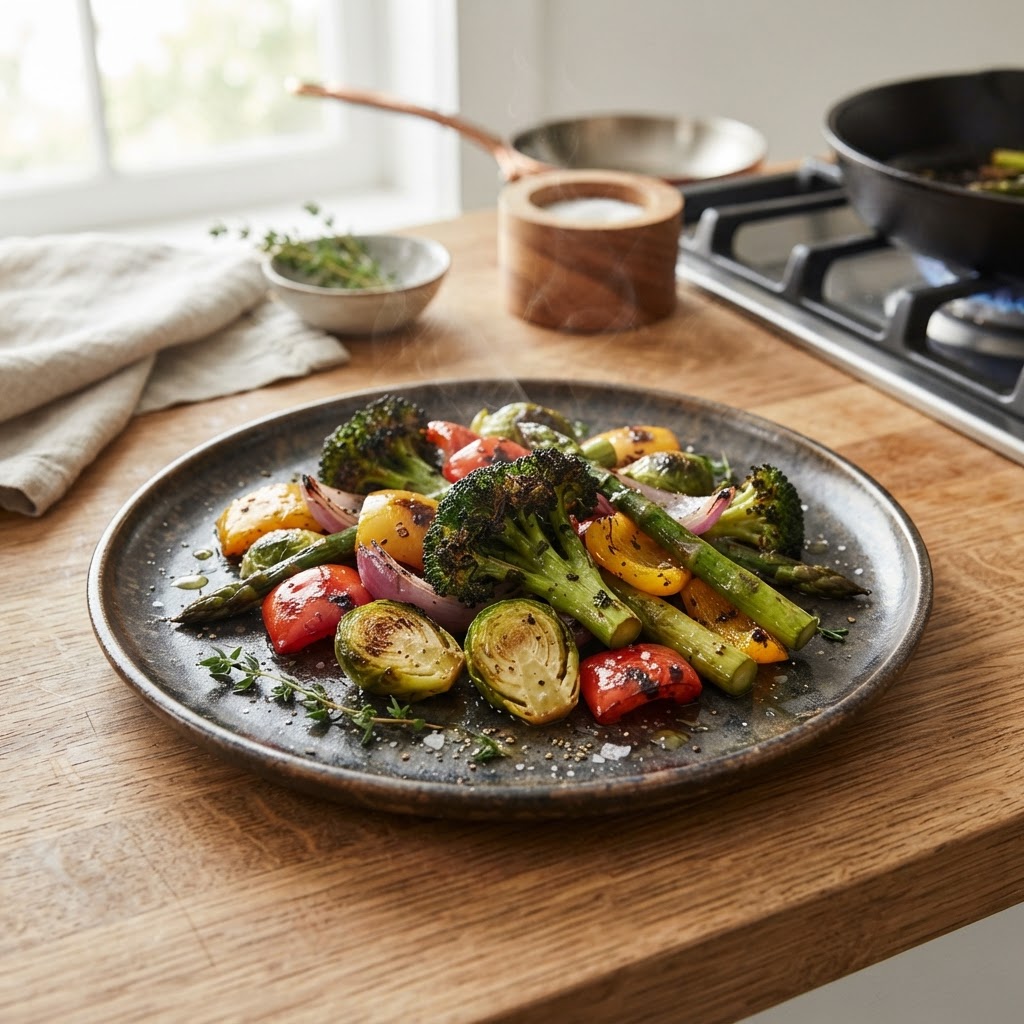
Quick reference
- Method: Best setup Main control
- Grill: Clean, hot grates Turn once edges color
- Broiler: Dry pieces, close heat Watch constantly
- Stovetop: Wide hot pan Avoid crowding
- All methods: Even, dry pieces Cook in one layer
Start with dry, evenly sized vegetables
Pat vegetables thoroughly dry before seasoning. Surface moisture creates steam, which delays browning and can leave the interior soft before the edges color. Cut pieces to a consistent size so thin sections do not burn while thicker ones remain firm. Large chunks suit dense vegetables such as cauliflower, carrots, and potatoes; smaller pieces work well for peppers, onions, zucchini, and mushrooms, but need closer attention.
- Use a clean towel or paper towel.
- Coat lightly with oil; excess oil can smoke.
- Keep delicate and dense vegetables in separate batches.
Create strong contact with high heat
Char develops where a dry, oiled surface meets intense heat. Preheat the grill, broiler, or skillet fully, then arrange vegetables in a single layer with space between pieces. Good contact matters more than constantly moving them. Let one side brown deeply before turning. If vegetables release liquid and begin steaming, the pan is crowded or the heat has dropped; remove some pieces and let the cooking surface recover.
- Preheat before adding vegetables.
- Use a wide skillet for stovetop cooking.
- Turn with tongs rather than stirring continuously.
Adjust the method
For grilled vegetables, clean and oil the grates, then use medium-high to high heat and place pieces across the hottest usable area. Under a broiler, set the rack according to your appliance and watch closely; broilers vary widely. For stovetop vegetables, a heavy skillet or griddle gives the most reliable contact. Add dense vegetables first, or par-cook them briefly, then char them in the pan.
- Grill: leave space around each piece.
- Broil: rotate the tray if browning is uneven.
- Stovetop: cook in batches when needed.
Know the line between char and burning
Good char is a thin, dark, fragrant crust with a tender, properly cooked center. Acrid burning smells harsh, tastes bitter, and usually produces a thick black layer. If the outside darkens too quickly, lower the heat or move the vegetables farther from the broiler or grill flame. For thick pieces, finish over gentler heat after the surface colors. Scrape off only loose, bitter soot; do not serve vegetables with a persistently burnt taste.
- Dark brown and blistered can be flavorful.
- A sharp, smoky-bitter smell signals trouble.
- Use smaller pieces only when they will not overcook.
Finish and judge doneness
Season before cooking for basic flavor, then add a finishing splash of lemon juice, vinegar, or a fresh herb after the vegetables come off the heat. Check the center with a fork: it should match the vegetable’s intended texture, not merely look browned outside. If edges are ready but the center is firm, move the pieces to a cooler part of the grill or pan and cover briefly to finish without adding more aggressive heat.
- Rest briefly before serving.
- Add acidic finishes after charring.
- Taste one piece from the thickest section.