How to Caramelize Onions Properly
Caramelize onions slowly in a wide pan for deep, sweet flavor, with timing, stirring cues, and an easy way to deglaze browned bits.
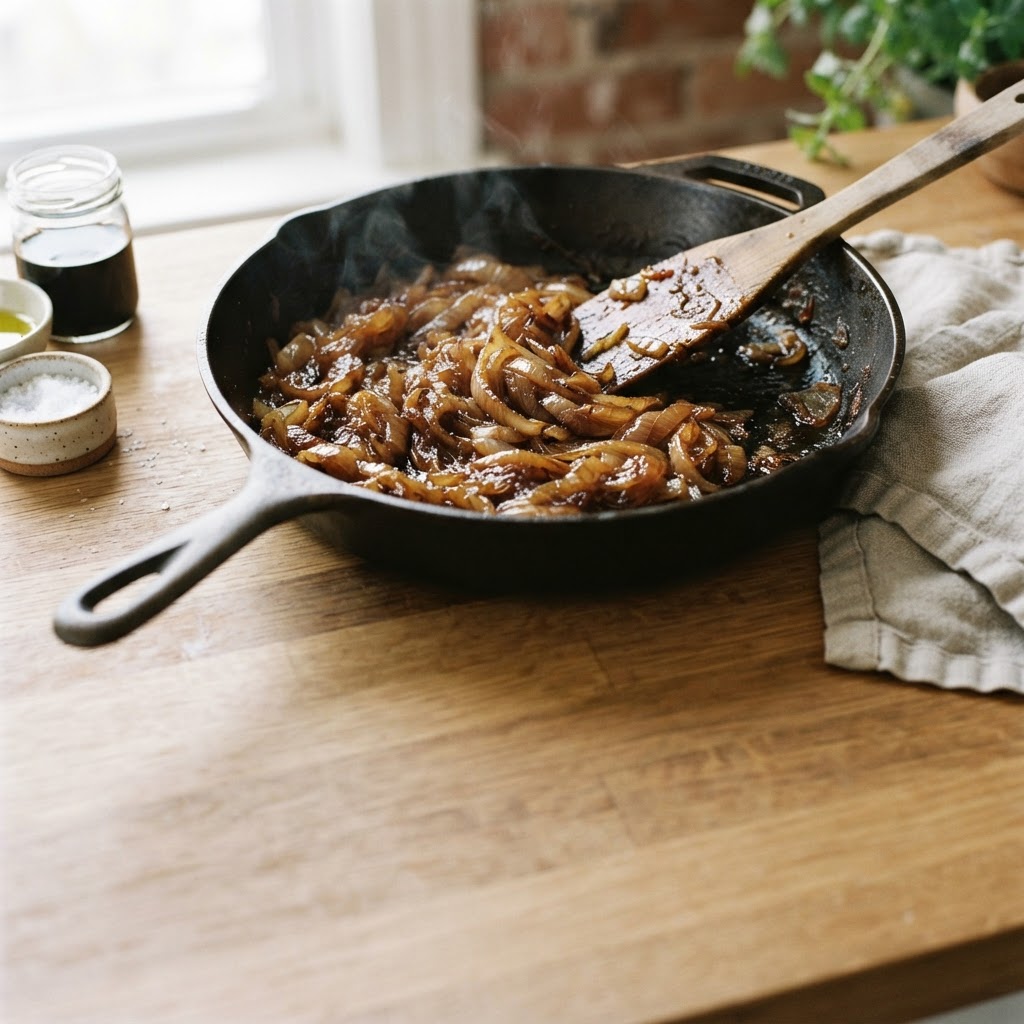
Quick reference
- Heat: Medium-low Keep onions gently cooking
- Pan: Wide skillet Encourages even browning
- Time: 35–60 minutes Varies with quantity and pan
- Finish: Deglaze Loosen flavorful browned bits
What you need
Use yellow, white, or sweet onions, plus a wide, heavy skillet or sauté pan. A wide pan gives the onions room to cook off moisture instead of steaming in a crowded pile. Add enough butter, oil, or a combination to lightly coat the pan. Plan on two to three large onions for a generous batch; they will shrink substantially as they cook.
- Onions, thinly sliced from root to stem
- Butter, oil, or both
- Salt, added lightly
Start slowly over medium-low heat
Warm the fat over medium-low heat, add the sliced onions, and toss to coat. Sprinkle in a small amount of salt, then spread the onions into an even layer. Cook uncovered, stirring every few minutes at first. They should soften and gradually turn golden, not sizzle aggressively or scorch. If the edges darken too quickly, lower the heat and scrape the pan as you stir.
- Keep the heat at medium-low.
- Stir more often as browning increases.
- Add a small splash of water if the pan looks dry.
Allow realistic cooking time
Properly caramelized onions usually take 35–60 minutes. The exact timing depends on the amount of onions, their moisture, the pan’s width, and your burner. In the first 15–20 minutes, they soften and release water. During the remaining time, that moisture cooks away and the onions become deeply golden, silky, and sweet. Do not rush by turning up the heat; that produces browned or burned onions before they fully soften.
- Pale and soft: still developing.
- Golden brown and jammy: ready.
- Dark spots: stir and reduce heat.
Deglaze the browned bits
When the onions are deeply golden and the pan has brown, stuck-on bits, deglaze it. Add one or two tablespoons of water, broth, vinegar, or wine, depending on the dish. Let the liquid bubble briefly, then scrape the bottom with a wooden spoon and stir it into the onions. Stop when the mixture is glossy and cohesive. Taste and adjust the salt at the end.
- Use water for a neutral finish.
- Use broth or wine for extra savory depth.
- Use a little vinegar for a sharper contrast.
Do not confuse them with quick sautéed onions
Quick sautéed onions are cooked over higher heat for a few minutes until softened or lightly browned. They are useful when you want onion flavor and some texture, but they are not caramelized onions. Caramelization requires slower cooking, patience, and a much deeper color. Serve the finished onions with burgers, toast, eggs, grains, roasted vegetables, or as a base for soups and sauces.
- Sautéed: quick, pale to lightly golden, firmer texture.
- Caramelized: 35–60 minutes, deep golden, jammy texture.