How to Build a Pantry Around Flavor Bases From Different Cuisines
Build a flexible pantry with aromatics, fermented ingredients, spices, chiles, acids, and sauces that turn simple staples into globally inspired meals.
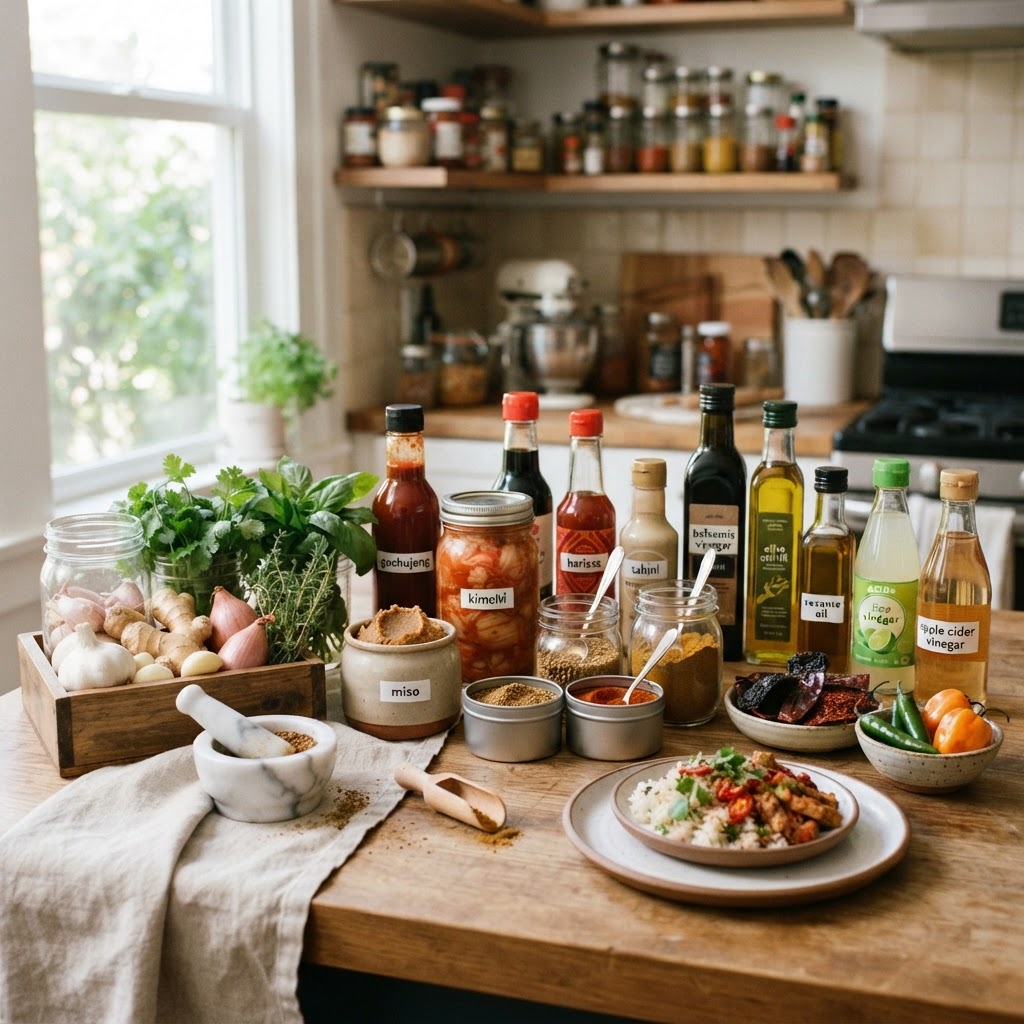
Quick reference
- Flavor base: Start with Best for
- Aromatics: Garlic, ginger, onion Soups, sautés, marinades
- Fermented: Soy sauce, miso, yogurt Depth and savory balance
- Spices and chiles: Cumin, paprika, dried chile Warmth and character
- Acids and sauces: Vinegar, citrus, tahini Brightness and finish
Plan by function, not by cuisine
A useful pantry is built around what ingredients do. Stock a few aromatics, fermented seasonings, spices, chiles, acids, and finishing sauces, then combine them in different directions. The same rice, beans, eggs, vegetables, chicken, or noodles can take on several identities without requiring a shelf of one-use products. Use QuickDinner’s global-cuisine pages for inspiration, and treat each cuisine as a set of flavor patterns rather than a strict shopping list.
- Choose ingredients that work in at least three meals.
- Buy small amounts of unfamiliar items until you know you use them.
- Keep neutral staples—rice, noodles, canned tomatoes, beans, and broth—nearby.
Build an aromatic foundation
Fresh garlic, onions, scallions, ginger, and citrus zest can shift a dish quickly. Keep onions and garlic on hand, and add ginger or scallions when you cook often with East Asian flavors. Dried alternatives are practical backups, but fresh aromatics usually provide more contrast. These ingredients can begin a tomato sauce, stir-fry, lentil soup, grain bowl, or marinade before any cuisine-specific seasoning is added.
- Garlic plus olive oil suits pasta, beans, and vegetables.
- Ginger plus scallion works with noodles, rice, and broths.
- Onion plus garlic creates a base for stews, sauces, and braises.
Add fermented ingredients for depth
Fermented foods bring concentrated savory, salty, tangy, or creamy notes. Soy sauce and miso can season broths, vegetables, eggs, and marinades. Fish sauce is powerful in small amounts, while kimchi or other fermented vegetables can serve as both seasoning and side dish. Plain yogurt adds coolness to spiced foods and can become a sauce with lemon, garlic, or herbs. Taste before adding extra salt.
- Store opened fermented sauces according to the package directions.
- Use miso or soy sauce to deepen soups without building a separate stock.
- Balance strong fermented flavors with acid, sweetness, fat, or fresh herbs.
Use spices and chiles as adjustable layers
A compact spice collection can cover many cooking styles: cumin for earthy warmth, coriander for citrusy lift, smoked or sweet paprika for color, and black pepper for bite. Add dried chile flakes, ground chile, or a jarred chile paste according to your heat preference. Blooming spices briefly in oil can make them more noticeable, but add delicate herbs and fresh chile later so their brighter flavors remain distinct.
- Start with one or two spices, then taste before adding more.
- Keep whole spices when possible and replace stale ground spices.
- Separate heat from flavor: use mild chile for color and hot chile sparingly.
Finish with acids and flexible sauces
Acid keeps pantry meals from tasting flat. Stock one mild vinegar, one sharper vinegar, and a reliable citrus option such as lemons or bottled lime juice. Add tahini, coconut milk, canned tomatoes, or a jarred curry or chile paste if they fit your cooking habits. A useful finishing formula is fat plus acid plus salt, adjusted with sweetness or heat. This turns roasted vegetables, grains, noodles, and leftovers into complete-feeling meals.
- Rice vinegar suits quick dressings and stir-fries.
- Red wine or apple cider vinegar works in beans, salads, and braises.
- Tahini, peanut butter, or coconut milk can turn seasonings into a sauce.
Organize for cooking speed
Group the pantry by use: aromatics and fresh produce together, fermented seasonings on one shelf, spices and chiles in a dark spot, and acids and sauces where you can see them. Label opened jars with the date and check best-before guidance. Before shopping, choose a base ingredient and two flavor directions—for example, chickpeas with cumin-lemon or soy-ginger. That simple plan prevents one-off purchases while keeping meals varied.
- Keep a short inventory of sauces, spices, and canned goods.
- Replace one nearly empty staple before buying a new specialty item.
- Use QuickDinner ingredient pages to find substitutions and practical pairings.