How to Build a Family Dinner When Everyone Wants Something Different
Build one flexible family dinner with a shared base, mix-and-match proteins, toppings, and sauces so each person can assemble a meal they enjoy.
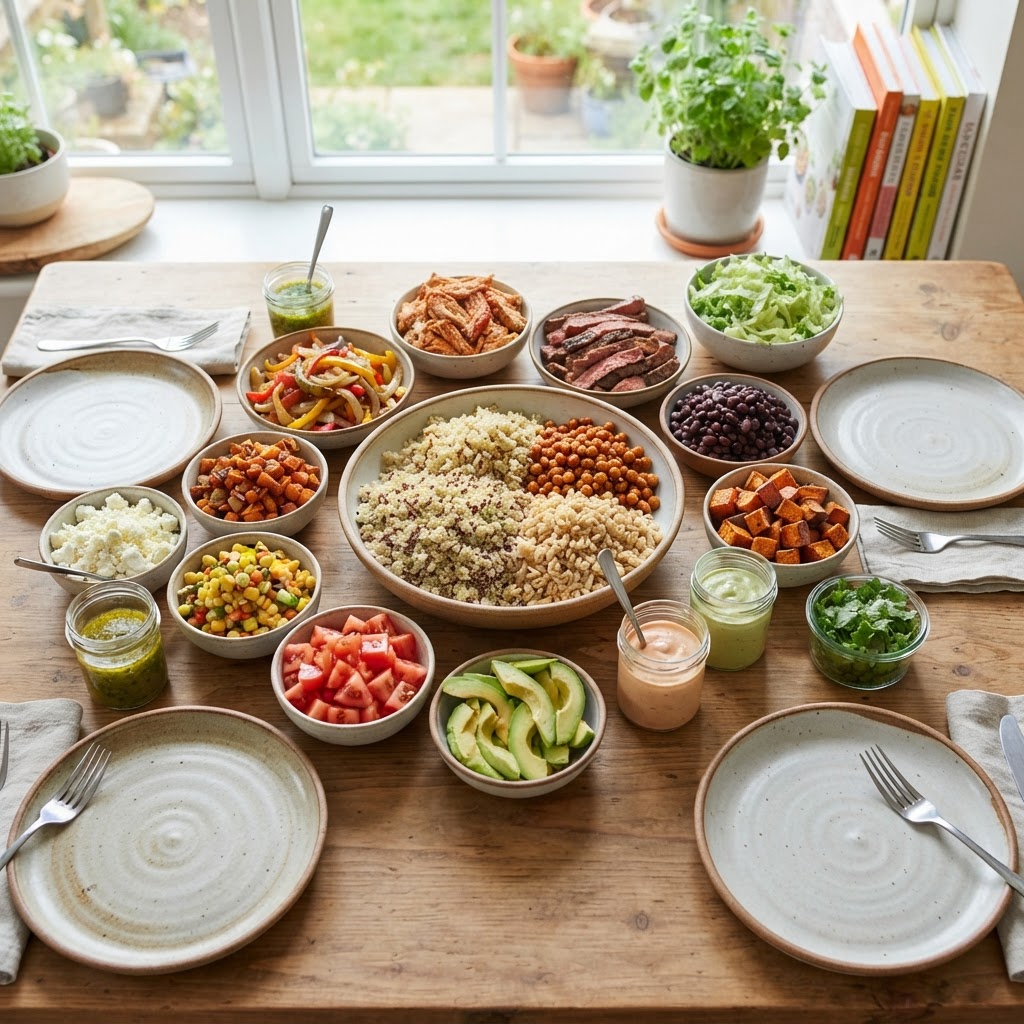
Quick reference
- Shared base: Rice, tortillas, pasta, greens Choose one filling foundation
- Protein: Chicken, beans, eggs, fish Offer one or two options
- Fresh toppings: Cucumber, herbs, avocado Add contrast and crunch
- Sauces: Salsa, yogurt sauce, pesto Serve separately
- Assembly: Bowls, wraps, plates Let everyone build their own
Start with one neutral base
Build the meal around a simple food that works with several flavor directions. Rice, roasted potatoes, pasta, tortillas, flatbreads, or a grain can all carry different combinations without demanding a separate entrée. Keep the base lightly seasoned, then let stronger flavors come from toppings and sauces. Cook enough for the meal and a planned leftover use, but avoid mixing everything together before serving.
- Rice bowls with plain or herbed rice
- Tacos with tortillas or tortilla chips
- Pasta with sauce served on the side
Choose one main protein—and a flexible backup
A single protein is usually enough when it can be portioned or seasoned simply. Roast or sauté chicken, cook ground meat, bake fish, or set out beans, eggs, or tofu as an alternate. Keep some pieces plain before adding a finishing sauce or spice blend. This gives cautious eaters a familiar option while others add heat, herbs, or a richer topping at the table.
- Use one protein in slices, crumbles, or bite-size pieces.
- Make the backup protein a pantry-friendly option such as beans.
- Season at the end when preferences differ most.
Put preference-makers in separate bowls
Toppings do the work of several side dishes without multiplying your cooking. Aim for two or three textures: something crisp, something creamy, and something fresh or pickled. Use ingredients that can cross cuisines, such as shredded cabbage, cucumber, grated cheese, herbs, corn, avocado, or quick-pickled onions. Keep strong ingredients separate so each person controls the amount.
- Crisp: cabbage, toasted seeds, chips, or radishes
- Creamy: cheese, avocado, hummus, or sour cream
- Fresh: herbs, cucumber, tomatoes, or citrus
Offer sauces, not multiple finished meals
Two contrasting sauces can make the same dinner feel different. Pair a mild option with a bolder one: yogurt sauce and salsa, pesto and tomato sauce, or lemon dressing and chili oil. Serve sauces at the table rather than coating the food in advance. This also makes leftovers more useful because the base and protein can be redirected into wraps, salads, or bowls.
- Keep one sauce mild and recognizable.
- Add heat separately with chili crisp or hot sauce.
- Use citrus, herbs, or vinegar for a quick flavor change.
Plan the cooking order and table layout
Cook the longest-lasting components first, then prepare toppings while they finish. Arrange the meal in a line from base to protein to toppings and sauces, so everyone can assemble without asking for a custom plate. Reserve a small portion of plain ingredients before adding strong seasonings. For food safety, refrigerate perishable cooked food within two hours, or within one hour when the temperature is above 90°F / 32°C; use general cooked leftovers within three to four days.
- Prep toppings while the base cooks.
- Label spicy items clearly.
- Pack components separately for better leftovers.