How to Build a Cozy Dinner Without Making It Heavy
Balance braises, pasta, and roasted dishes with crisp vegetables, bright acids, fresh herbs, and lighter sides for a satisfying cool-weather dinner.
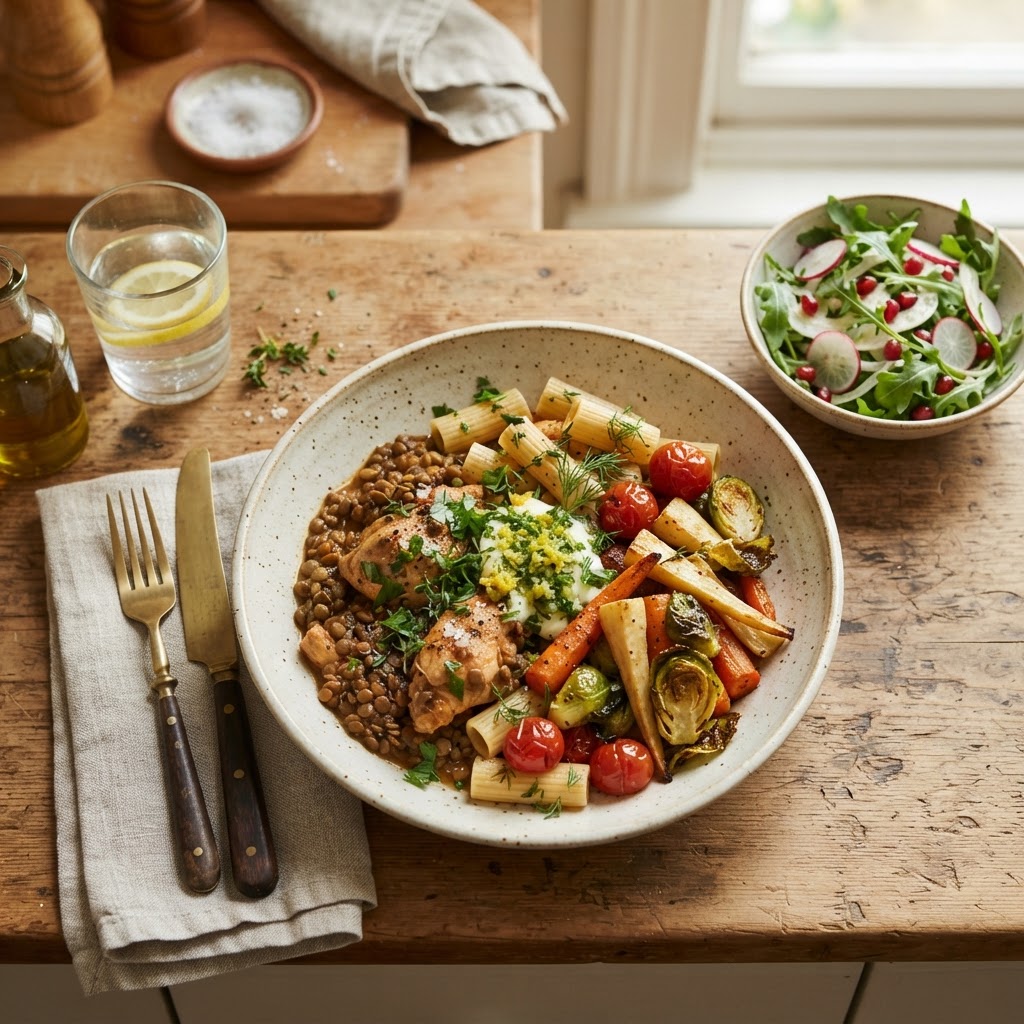
Quick reference
- Main dish: Braise, pasta, roast Choose one rich element
- Acid: Lemon, vinegar, pickles Add near serving
- Freshness: Herbs, greens, raw vegetables Use generously
- Lighter side: Brothy beans, salad, roasted vegetables Keep portions moderate
Start with one source of richness
A cozy dinner needs a satisfying centerpiece, but it does not need several heavy components. Choose one: a slow-braised meat, creamy pasta, cheesy baked dish, or deeply roasted vegetable. Let it provide warmth and depth, then keep the rest of the plate brighter and simpler. This approach works for fall dinner recipes because the meal still feels generous without stacking cream, butter, cheese, and dense sides together.
Build contrast with acidity
Add a sharp element to cut through richness and make familiar comfort food taste more alive. Finish a braise with sherry vinegar, lemon juice, or a spoonful of mustard. Toss pasta with lemon zest and a splash of its cooking water, or serve roasted squash with pickled onions. Taste before adding more: acidity should lift the dish, not make it sour.
- Braises: vinegar, citrus, or mustard
- Pasta: lemon, wine, or tomato
- Roasted foods: pickles or yogurt with herbs
Put a fresh vegetable on the plate
A crisp or lightly cooked vegetable changes the texture of a soft, slow-cooked main. Shaved fennel, bitter greens, cabbage slaw, or a simple apple-and-celery salad can bring snap to a braise. For a warm option, steam or quickly sauté green beans, broccoli, or leafy greens until just tender. Dress vegetables separately so they retain their own flavor instead of absorbing every rich sauce.
Use herbs as a finishing ingredient
Fresh herbs are more effective at the end than buried in the cooking. Scatter parsley over a stew, add dill to roasted potatoes, or fold basil and arugula into pasta just before serving. Combine herbs with lemon zest, grated garlic, or toasted seeds for a quick finishing sprinkle. The goal is not decoration; it is a fresh, aromatic counterpoint to browned or slow-cooked flavors.
Choose a lighter side and serve with restraint
Pair a rich main with a side that contributes moisture, color, or crunch rather than another dense starch. A brothy bean dish, bitter salad, roasted greens, or simply dressed grains can round out dinner without competing with the centerpiece. Serve the main in a moderate portion and let the vegetable side occupy real space on the plate. A crisp drink or sparkling water can reinforce the same sense of balance.
A simple planning formula
For How to Build a Cozy Dinner Without Making It Heavy, plan one deeply flavored main, one bright vegetable, one fresh finishing element, and one modest side. Make the acid and herbs at the last minute, when their flavors are clearest. If the main tastes rich but flat, reach for acid; if it feels soft, add crunch; if it seems too intense, add a plain vegetable or grain. These small adjustments make comfort food feel complete rather than cumbersome.