How to Brown Ground Beef Without Steaming It
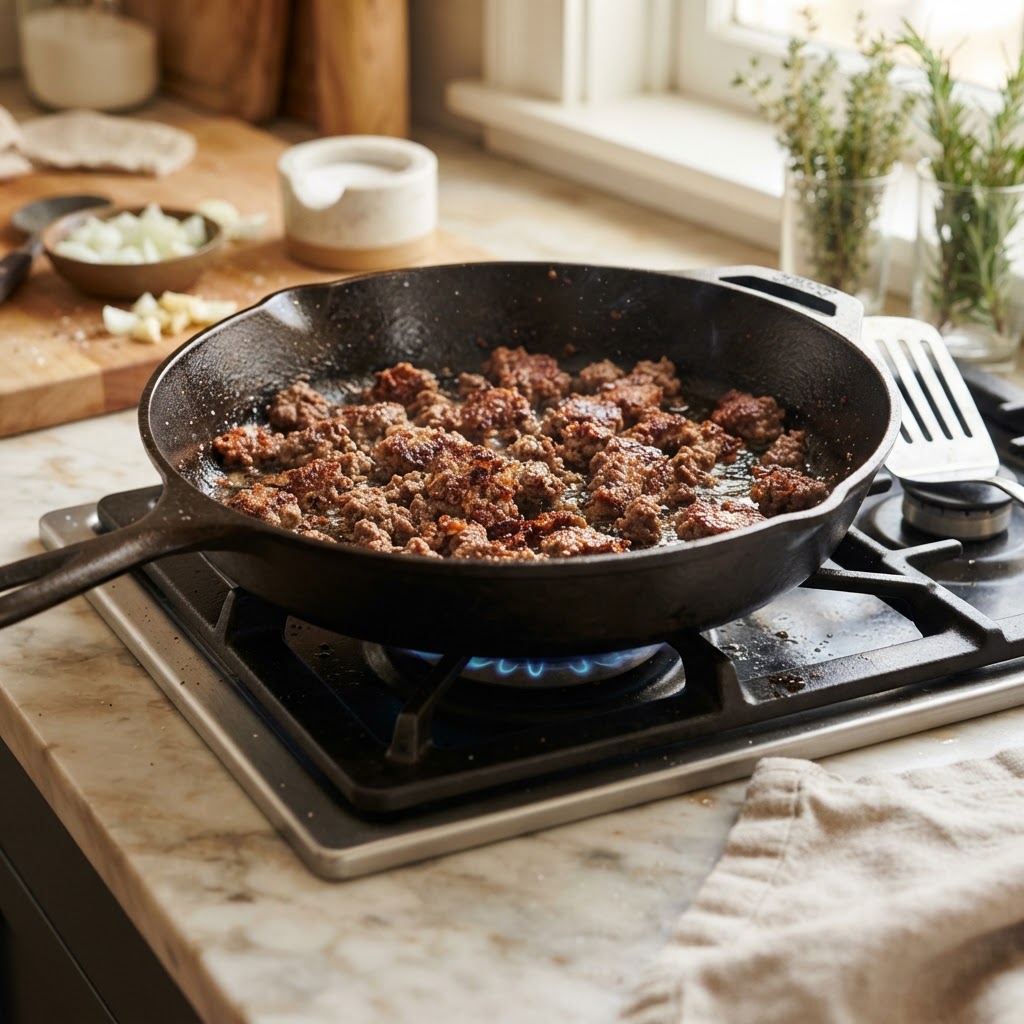
Brown ground beef properly in a wide, hot pan by working in batches, leaving space between pieces, and stirring only after a crust forms.
Quick reference
- Pan: Wide, heavy skillet More surface contact
- Heat: Medium-high to high Pan should be hot
- Batch size: Single loose layer Avoid crowding
- Stirring: After browning starts Let contact do the work
- Doneness: 160°F / 71°C Check the thickest pieces
Start with a wide, hot pan
Use a wide skillet or sauté pan that can hold the beef in a loose layer. Heat it over medium-high to high heat before adding the meat; a drop of water should sizzle and evaporate quickly. Add a small amount of neutral oil only if the beef is very lean or the pan is not well seasoned. A broad cooking surface helps moisture escape instead of collecting around the meat.
Keep the beef dry and uncrowded
Pat the beef dry with paper towels if it looks wet, especially after thawing. Too much surface moisture delays browning. If the pan cannot hold the meat without piling it up, cook in batches. Crowded beef releases moisture faster than it can evaporate, so it simmers or steams rather than developing browned edges.
- Use a single, loose layer.
- Leave visible gaps between portions.
- Return all batches to the pan at the end.
Let the first side brown before stirring
Break the beef into large chunks as you add it, then press them into the pan for good contact. Leave the meat alone for about 2 to 3 minutes, or until the underside has browned. Stir and break it into smaller crumbles only after that first color develops. Frequent stirring moves the meat away from the hot surface and can prevent a proper sear.
Finish the crumbles evenly
Continue cooking, stirring occasionally, until the beef is evenly browned and no pink remains. If liquid gathers in the pan, keep cooking uncovered so it can evaporate; if the pan is crowded, transfer the cooked batch to a bowl and continue separately. For food safety, ground beef should reach 160°F / 71°C, measured in the thickest pieces.
Drain only after browning
Do not drain the pan at the beginning: rendered fat helps carry heat across the meat and supports browning. Once the beef is fully browned, tilt the pan and spoon off excess fat, or transfer the meat to a lined plate. Return it to the skillet before adding sauce, seasoning, vegetables, or other ingredients.
Quick troubleshooting
Pale, gray beef usually means the pan was too cool, the meat was too wet, or too much was added at once. A thin layer of liquid can be cooked off, but a deep pool is a sign to remove some liquid and continue in smaller batches. Seasoning can be added during or after browning, depending on the recipe and how strongly you want the beef seasoned.
- Gray and watery: increase heat and reduce crowding.
- Sticking: wait for browning before turning.
- Too greasy: drain after the meat is browned.