How to Brown Butter Without Burning It
Brown butter evenly with a light-colored pan, controlled heat, and visual cues that tell you exactly when to stop.
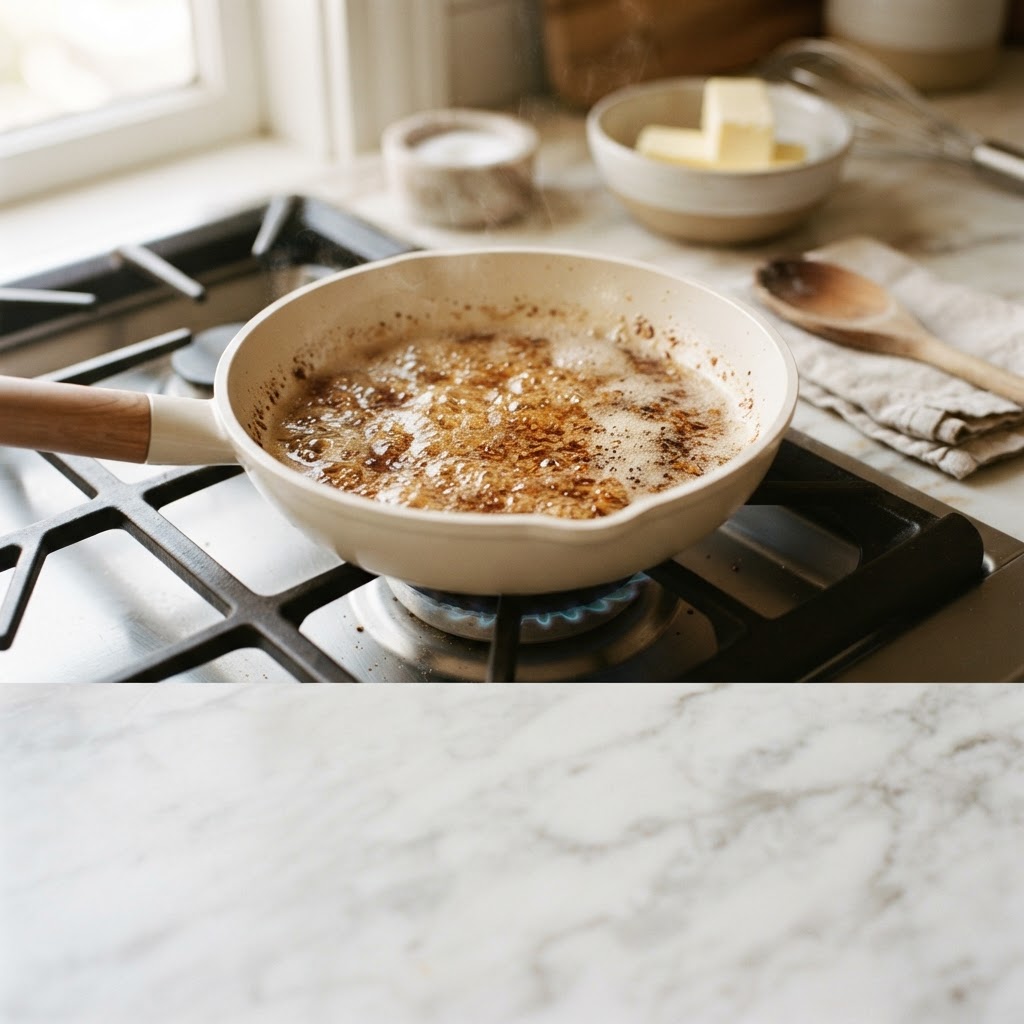
Quick reference
- Pan: Light-colored skillet Makes color changes easy to see
- Heat: Medium Adjust if browning is too fast
- Foam cue: Bubbles rise, then settle Keep swirling
- Finish cue: Amber solids and nutty aroma Transfer immediately
Start with the right pan and heat
Use a light-colored stainless-steel or other pale pan so you can see the milk solids change color. Add the butter and set the pan over medium heat. A dark pan can hide the shift from golden to burnt, while high heat gives the solids too little time to brown evenly. Cut cold butter into pieces if you want it to melt at a more consistent pace.
Watch the foam stages
The butter will melt, then foam vigorously as its water cooks off. Swirl the pan occasionally so the milk solids move across the bottom instead of sitting in one hot spot. The foam may briefly obscure the butter, then begin to thin and settle. Once the bubbles become smaller and the liquid looks clearer, watch the color closely.
- Melted: butter is liquid and pale.
- Foaming: water is evaporating; swirl often.
- Settling: browning is about to happen quickly.
Look for amber solids and a nutty aroma
As the foam clears, milk solids will collect on the bottom and turn from pale yellow to golden, then amber. The butter should smell toasted and nutty, not sharp or smoky. Lift the pan briefly from the heat if the color is changing too fast; residual heat will continue the process. This visual and aromatic combination is more reliable than a fixed cooking time, since pans and burners vary.
Transfer immediately when browned
As soon as the solids reach a warm amber color and the aroma is nutty, pour the butter into a heatproof bowl or another cool pan. Scrape in the browned bits—they contain much of the flavor. Do not leave the butter in the hot skillet: carryover heat can push it from perfectly browned to bitter within moments.
Use it while warm or store it
Warm brown butter can be spooned over vegetables, pasta, fish, pancakes, or baked goods. If a recipe calls for cooled or solidified brown butter, let it cool in the transfer bowl before refrigerating. For a smoother sauce, strain it only if you prefer to remove the browned milk solids; otherwise, keep them for their toasted flavor.
- Add a pinch of salt for savory dishes.
- Stir in lemon or herbs after the butter leaves the heat.
- Cool before combining with ingredients that could scorch.