How to Braise Vegetables Until Tender Without Making Them Mushy
Braise vegetables gently with the right cuts, a shallow layer of liquid, and careful timing so they become tender while keeping their shape.
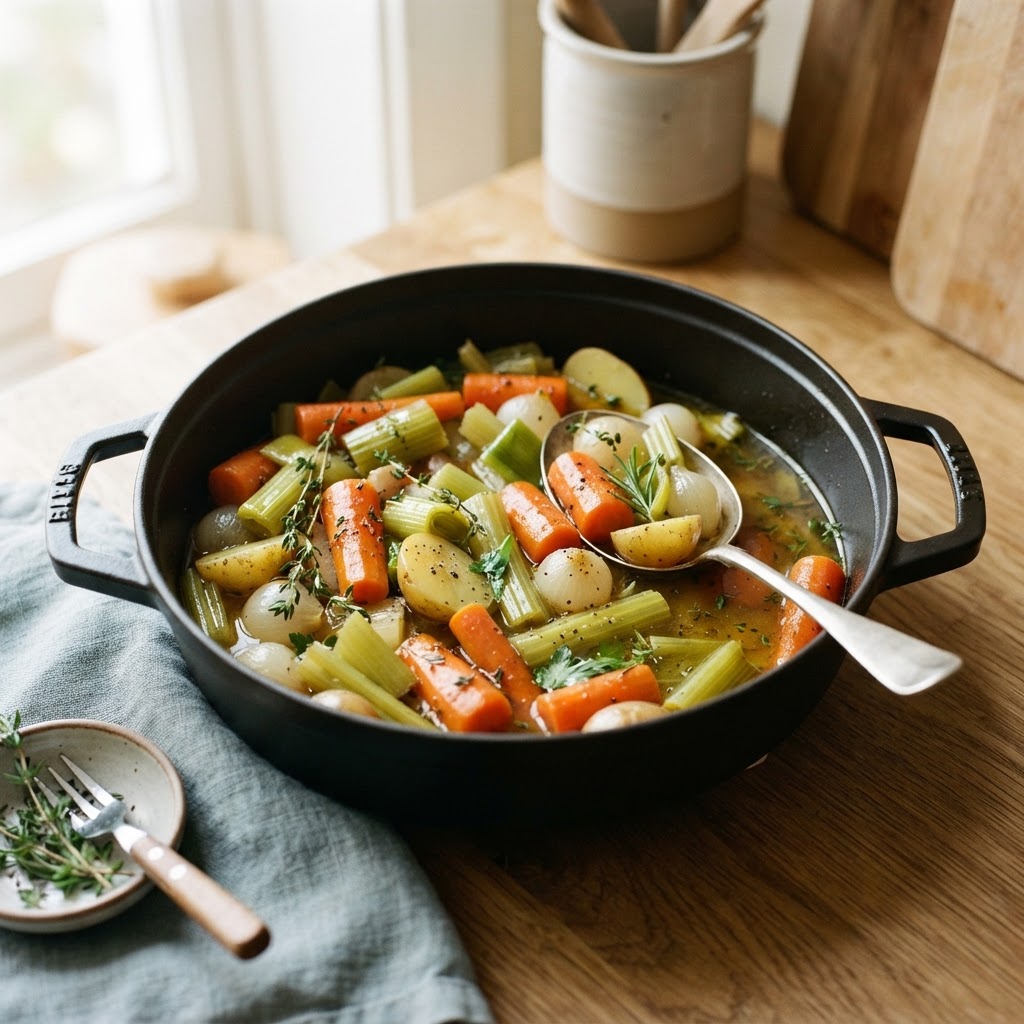
Quick reference
- Vegetable: Cut and timing Add firmer pieces first
- Carrots: 2-inch pieces; 20–30 min Keep pieces fairly thick
- Fennel: Wedges; 20–25 min Sear cut sides first
- Cabbage: Wedges; 15–25 min Avoid overcrowding
- Green beans: Whole or large pieces; 10–15 min Finish uncovered
Choose vegetables that can hold their shape
Braising suits sturdy vegetables with enough structure to soften gradually: carrots, fennel, leeks, cabbage, celery root, turnips, winter squash, green beans, and cauliflower. Use vegetables of similar density in the same batch, or add firm pieces before quick-cooking ones. Very delicate vegetables, such as baby spinach or thin zucchini, are better stirred in near the end rather than braised from the start.
- Choose fresh, firm vegetables.
- Cut dense vegetables smaller than quick-cooking ones.
- Keep similar-sized pieces together.
Cut for even cooking
The cut controls texture more than the clock. Make dense vegetables into thick slices, wedges, or chunks rather than thin pieces that collapse quickly. Aim for pieces with comparable thickness, and leave a flat side when possible so they can brown. Large pieces take longer but are less likely to turn mushy; tiny pieces soften fast and need close attention.
- Carrots: thick coins or batons.
- Cabbage and fennel: wedges held together at the core.
- Leeks: thick sections, rinsed well.
Use a shallow layer of liquid
Sear the vegetables in a little oil first if you want browned edges and deeper flavor. Then add stock, water, wine, or another cooking liquid to reach roughly one-quarter to one-third of the way up the vegetables—not cover them. The vegetables should partly steam while their bottoms gently simmer. Bring the liquid to a quiet simmer before covering; vigorous boiling can break edges apart.
- Use a wide, heavy pan for an even layer.
- Keep the liquid below the vegetable tops.
- Season the liquid lightly, then adjust at the end.
Cover first, then uncover
Cover the pan to trap steam and soften firm centers. Cook over low to medium-low heat until a thin knife slides into the thickest piece with slight resistance. Depending on cut size and vegetable, this commonly takes about 10 to 30 minutes. Check early, especially with smaller pieces. If the vegetables are tender but the liquid is plentiful, remove the lid and simmer briefly to concentrate it.
- Turn pieces once if the pan cooks unevenly.
- Add quick-cooking vegetables during the final minutes.
- Do not keep cooking after the center is tender.
Finish for flavor and definition
Transfer tender vegetables carefully with a slotted spoon if needed. Taste the cooking liquid and reduce it until lightly glossy, then spoon it over the vegetables. A small amount of butter or olive oil, fresh herbs, citrus zest, vinegar, or toasted nuts can sharpen the finish. Let the vegetables rest for a minute before serving so excess liquid settles without overcooking them.
- Use acidity sparingly to brighten rich braises.
- Add delicate herbs after the heat is off.
- Serve promptly for the firmest texture.