How to Bloom Spices Without Burning Them
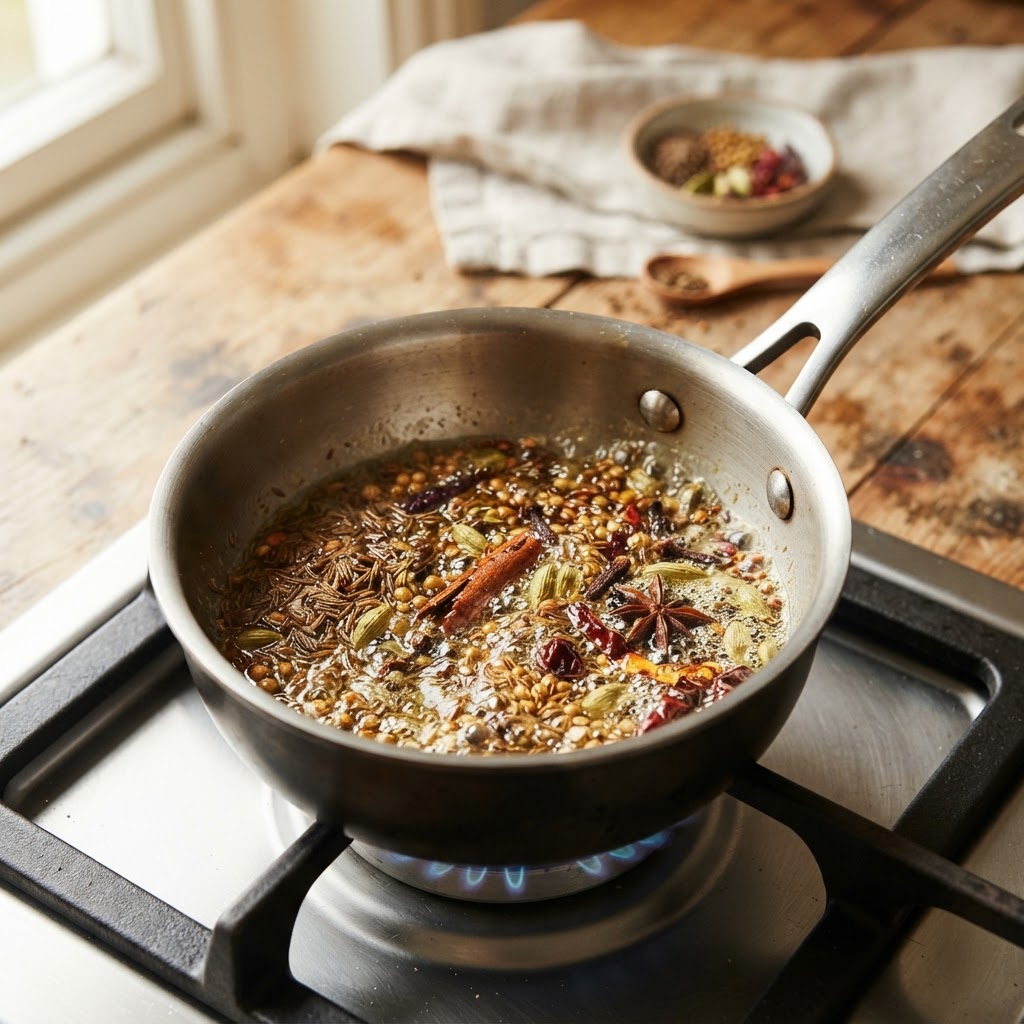
Bloom spices in warm oil for 30–60 seconds, adjusting heat and timing for whole or ground spices to build flavor without scorching.
Quick reference
- Whole spices: Medium heat; 30–90 seconds Add first; listen for crackling
- Ground spices: Low to medium-low; 15–30 seconds Stir constantly
- Warning sign: Smoke or darkening Remove from heat immediately
- Add liquid: When spices are fragrant Stops browning quickly
Start with moderate heat
Use a small, heavy skillet or the pot your recipe calls for, then add the oil and warm it over medium heat. The oil should shimmer lightly but never smoke. Blooming spices is about gently transferring their aroma into the fat, not frying them aggressively. If the oil smokes before the spices go in, lower the heat and let it cool briefly; overheated oil can scorch spices on contact.
Add whole spices first
Whole cumin, mustard, fennel, coriander, cardamom, cinnamon, and dried chiles generally tolerate more heat than ground spices. Add them to the warm oil and cook until fragrant, usually 30 to 90 seconds. Some seeds will crackle or pop, which is a useful cue. Keep the pan moving or stir occasionally so small seeds do not sit against one hot spot.
- Add mustard seeds with a lid nearby if they pop vigorously.
- Remove cinnamon or bay leaves later if the recipe calls for it.
- Do not wait for whole spices to turn dark; fragrance is the goal.
Treat ground spices gently
Lower the heat before adding ground cumin, coriander, turmeric, paprika, chili powder, or a spice blend. Ground spices can burn quickly because their fine particles contact more oil and the pan surface. Stir for about 15 to 30 seconds, just until the mixture smells rounded and the spices look evenly moistened. If the recipe includes onion, garlic, or ginger, they can help distribute heat once added, but do not use them to rescue already-burned spices.
Know the warning signs
Acrid smoke, black specks, a harsh smell, or spices turning rapidly from bright to very dark means the pan is too hot. Move it off the burner at once. If the spices smell bitter, scraping them into the dish usually spreads the damage; wipe out the pan and begin again with fresh oil and spices. A little browning can be flavorful, but scorching tastes sharp and cannot be corrected with extra seasoning.
When to add liquid—or skip the oil
Add water, stock, coconut milk, tomato, or another recipe liquid as soon as the spices are fragrant and evenly coated. The liquid quickly cools the pan and turns the bloom into a sauce or cooking base. For delicate ground spices, a water-based bloom is often safer: stir them with a little warm liquid or add them directly to a simmering curry, soup, or stew. This suits QuickDinner’s curry, rice, and globally inspired recipes when the dish already has plenty of moisture or when you want to avoid oil scorching.
- Use oil blooming for a concentrated, toasted aroma.
- Use water-based blooming for delicate powders or wet dishes.
- If adding liquid to hot oil, pour carefully to avoid splattering.
Use the technique across recipes
For curry, bloom whole spices in oil before adding aromatics, then add ground spices briefly before the tomatoes or other liquid. For rice, warm spices in the cooking fat before stirring in rice and water. The same sequence works for beans, roasted vegetables, soups, and globally inspired sauces: warm the fat, add the sturdier spices, reduce heat for powders, and add liquid when the aroma peaks. Timing varies with pan size, burner strength, and the amount of oil, so watch the spices more than the clock.