How Salty Should Pasta Water Be?
See how much salt pasta water needs, when to add it, and how to adjust the amount for salty sauces, fresh pasta, and different pot sizes.
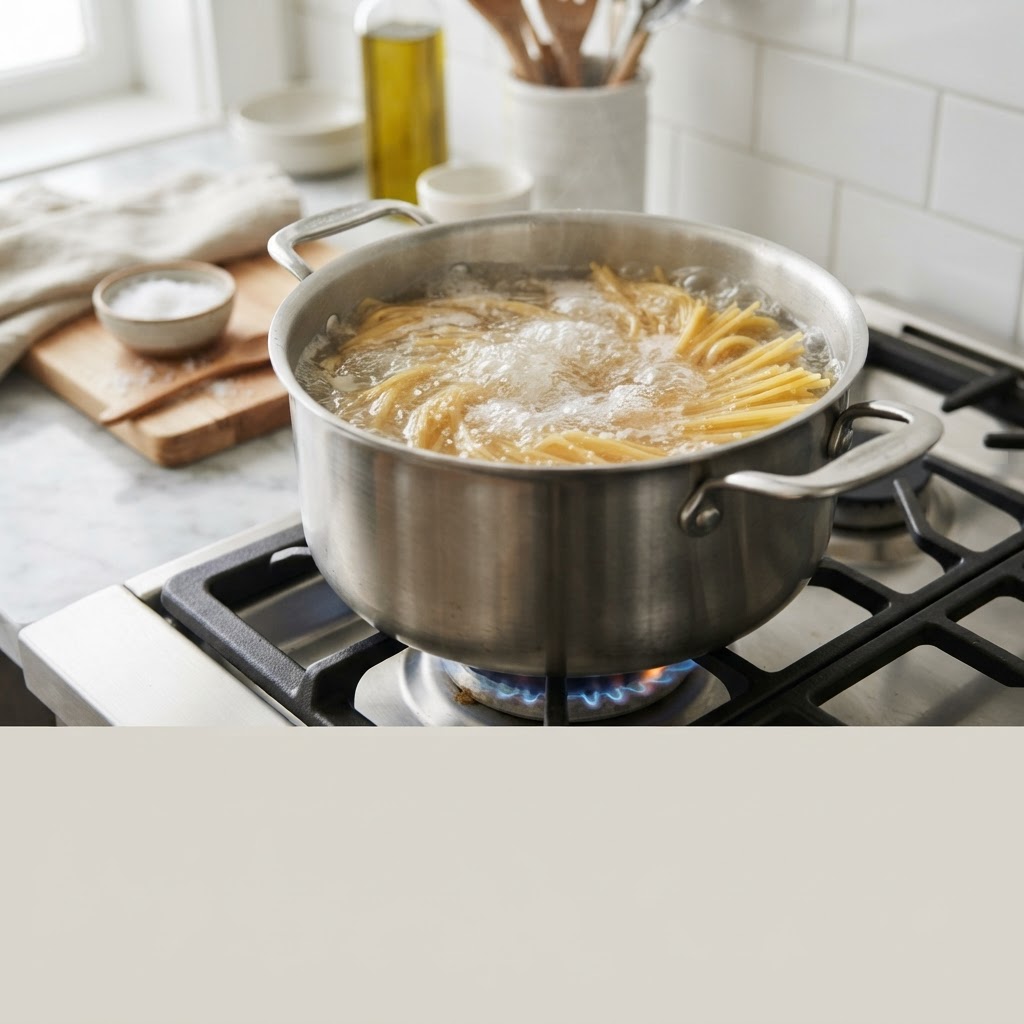
Quick reference
- Water: Salt range Use table salt unless noted
- 1 quart: 1/2–1 teaspoon Light to moderate seasoning
- 2 quarts: 1–2 teaspoons Good for a small pot
- 4 quarts: 2–4 teaspoons Typical pasta pot
- Salty sauce: Use the low end Taste before adding more salt
The short answer
For most pasta, use 1/2 to 1 teaspoon of salt per quart of water. That gives the noodles noticeable seasoning without making the cooking water aggressively salty. Use the lower end when the pasta will be finished in a salty sauce—such as one with bacon, sausage, olives, anchovies, capers, Parmesan, or a concentrated jarred sauce. Use the higher end for a mild sauce or a simple butter-and-cheese finish.
When to add the salt
Bring the water to a full boil or at least a strong simmer, then add the salt and stir until it dissolves. Adding it after the water heats makes timing and measuring easier, and it avoids leaving salt sitting on the bottom of a cold pot. Once the water returns to a boil, add the pasta and stir promptly so strands or shapes do not stick together.
Choose the amount by the whole dish
The right pasta water salt ratio depends on everything that follows. If the sauce is already salty, season the cooking water modestly and taste the sauce before adding reserved pasta water. For unsalted tomato sauce, plain vegetables, or pasta served with olive oil, you can use the upper end of the range. Fresh pasta usually needs less time in the pot, so season it conservatively and finish seasoning the dish at the end.
- Salty sauce: 1/2 teaspoon per quart
- Balanced sauce: about 3/4 teaspoon per quart
- Mild sauce: up to 1 teaspoon per quart
Measure by pot size, not by handful
A large pot can hold several quarts, so a casual pinch may under-season the water. Check the pot’s capacity once with a measuring container, then use the table as a repeatable guide. If you are cooking pasta in less water to save time or use a wide skillet, scale the salt to the actual water volume rather than automatically using the amount meant for a full pot.
Do you need oil in pasta water?
No. Oil is not needed for boiling pasta and can leave the noodles slick, making sauce cling less effectively. Prevent sticking by using enough water for the pasta, stirring during the first minute, and stirring again if needed. If you are saving pasta water, scoop it out before draining; its starch and seasoning can help loosen and finish the sauce.