How Much Liquid Does a Slow Cooker Need?
Use less liquid than you would in an oven: start with 2–4 cups for soups and stews, and enough to come partway up a roast.
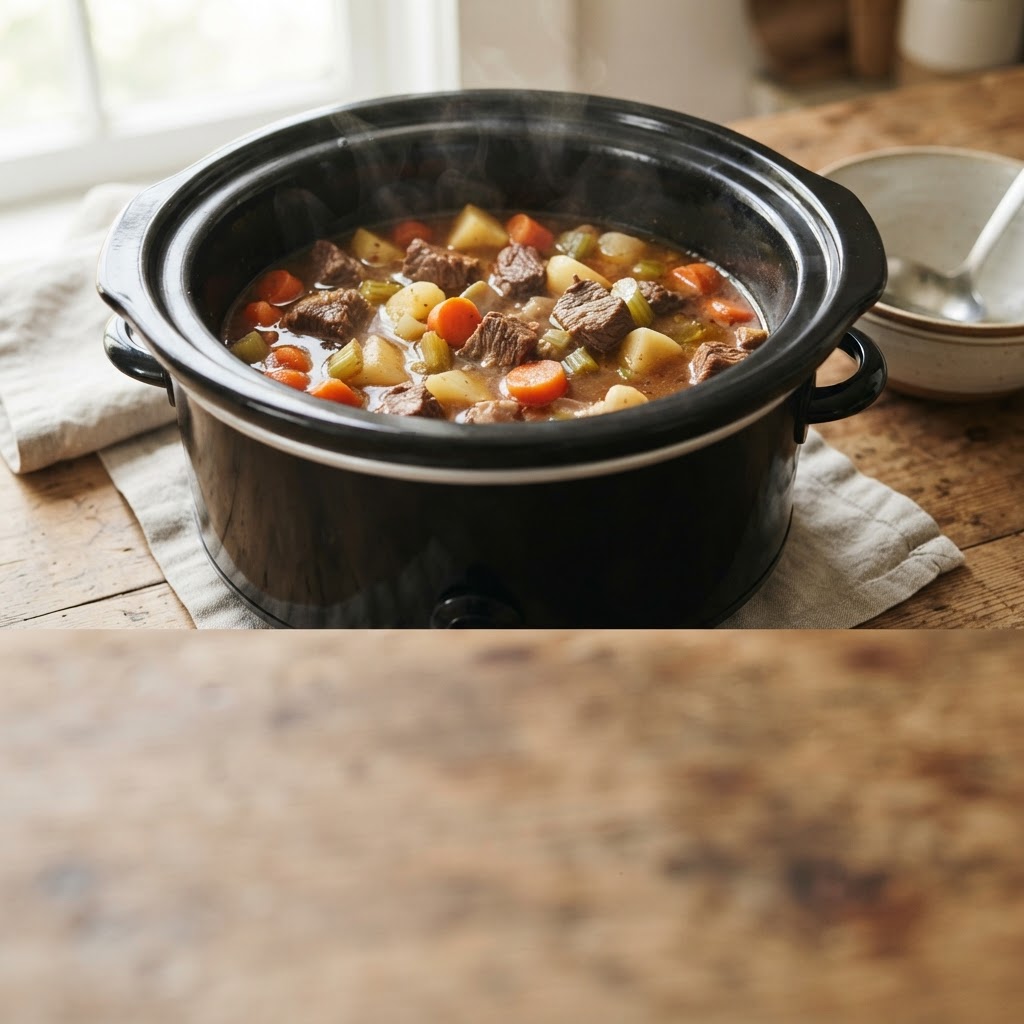
Quick reference
- Dish: Starting liquid Adjust for ingredients
- Soup: 4–6 cups Usually mostly covered
- Stew: 2–4 cups Liquid should not drown ingredients
- Roast: 1–2 cups About one-quarter to one-third up the meat
- Saucy dish: 1–2 cups Thicken after cooking if needed
Why slow cookers need less liquid
A slow cooker has a tightly covered lid and cooks at a gentle, steady temperature. Little moisture escapes, so broth, wine, and water remain in the pot instead of evaporating as quickly as they do in an uncovered oven dish. Ingredients also soften and release their own juices. For that reason, use roughly one-third to one-half less liquid than you would for a comparable oven recipe, unless the recipe gives a tested slow-cooker amount.
Starting amounts by dish
The right slow cooker liquid amount depends on the shape of the cooker, the quantity of food, and how much liquid the ingredients contain. Use these amounts as starting points, then adjust for the recipe rather than filling the pot by guesswork.
- Soup: begin with 4–6 cups, or enough to nearly cover the ingredients.
- Stew: begin with 2–4 cups; the liquid should come partway up the solid ingredients.
- Roast: begin with 1–2 cups, usually reaching about one-quarter to one-third up the meat.
Let vegetables contribute moisture
Onions, mushrooms, tomatoes, cabbage, zucchini, and frozen vegetables can release a surprising amount of water as they cook. A stew that looks barely moistened at the start may finish with plenty of broth. Fresh tomatoes and watery vegetables call for less added liquid; beans, lentils, pasta, and grains absorb more. Add enough liquid for those ingredients to cook, but do not automatically add extra water at the beginning.
Avoid overfilling the cooker
Keep the slow cooker between half full and two-thirds full for more even cooking. Too much food or liquid can slow heating and cause bubbling or spills around the lid. Liquid does not need to cover meat for most braises. Arrange dense vegetables and meat in an even layer, pour liquid around them, and leave room for ingredients to release moisture.
How to fix too much or too little liquid
Check near the end rather than opening the lid repeatedly, since each opening releases heat. If the dish is watery, remove the lid for the final 20–30 minutes on high, or transfer some liquid to a saucepan and reduce it. For a thicker stew or sauce, stir in a cornstarch slurry during the final 15–20 minutes. If the dish is too dry, add hot broth a little at a time and continue cooking until the ingredients are tender.