How Long to Bake Salmon at 400°F
See how long to bake salmon at 400°F by thickness, where to place the skin, and how to reach 145°F without dry edges.
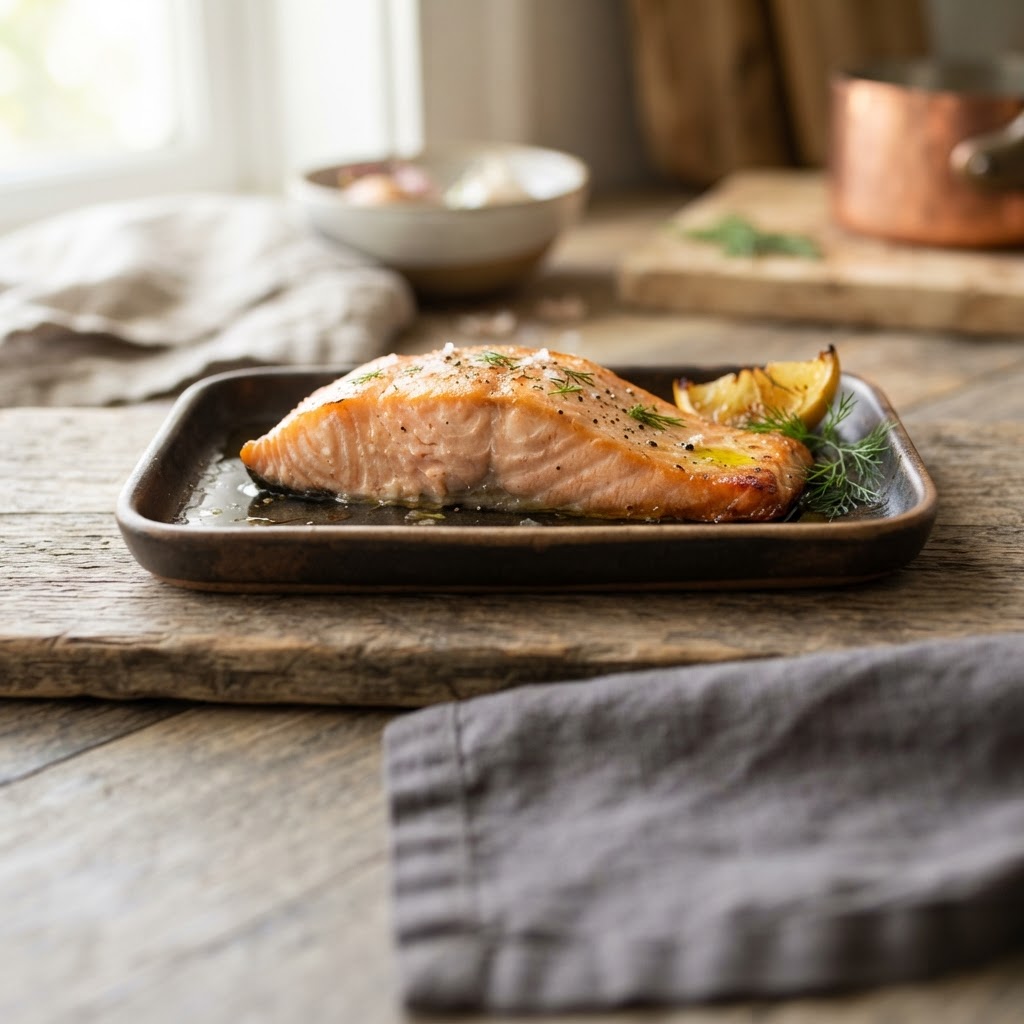
Quick reference
- Thickness: Approximate time At 400°F, uncovered
- ½ inch: 8–10 minutes Check early
- 1 inch: 12–15 minutes Most fillets
- 1½ inches: 16–20 minutes Thicker center
- Endpoint: 145°F At the thickest part
How long to bake salmon at 400°F
For most salmon fillets, plan on 12–15 minutes at 400°F. The more reliable guide is thickness: a thin ½-inch piece may finish in 8–10 minutes, while a 1½-inch center can take 16–20 minutes. Oven calibration, the starting temperature of the fish, and whether several fillets share a pan can change the timing, so begin checking a few minutes early.
Use thickness, not weight
Measure the thickest part of the fillet rather than relying on its total weight. Pieces with an even thickness cook more predictably; tapered tails will finish first. For a full side of salmon, use the thickest center as your timing reference and protect thinner ends if they begin to look dry.
- ½ inch: 8–10 minutes
- 1 inch: 12–15 minutes
- 1½ inches: 16–20 minutes
Skin-on placement and pan setup
Place skin-on salmon skin-side down on a lightly oiled sheet pan or baking dish. The skin helps shield the flesh from the hot pan and can be removed after baking if you do not plan to eat it. Pat the surface dry first, leave space between pieces, and place the pan on the center rack for more even heat.
Foil or uncovered?
Bake uncovered for firmer, lightly roasted edges and a drier surface. Covering the fish loosely with foil holds in moisture and is useful for lean or very thin fillets, but it softens the surface and can slightly lengthen the cook. To avoid dry edges, brush the salmon with oil, avoid overbaking tapered portions, and start checking before the shortest estimate is reached.
Check for 145°F, then rest
Salmon is done when the thickest part reaches 145°F on an instant-read thermometer. Insert the probe from the side into the center, avoiding the pan. If the fillet is close but not yet at temperature, return it to the oven for 1–2 minutes at a time. Let it rest for about 3 minutes after baking; residual heat may raise the temperature slightly while the juices settle.