How Long to Bake Pork Chops at 400°F
See how long to bake pork chops at 400°F by thickness and cut, plus how to check doneness with a thermometer for juicy, safe results.
Quick reference
- Cut and thickness: Approximate bake time Check temperature early
- Boneless, 1 inch: 18–22 minutes At 400°F
- Bone-in, 1 inch: 20–25 minutes At 400°F
- Boneless, 1½ inches: 22–28 minutes At 400°F
- Bone-in, 1½ inches: 25–30 minutes At 400°F
The short answer
For a reliable starting point, bake 1-inch pork chops at 400°F for about 18–25 minutes. Boneless chops usually cook faster than bone-in chops, while thicker cuts need more time. Since ovens, pans, and chop sizes vary, use the clock only as a guide. Begin checking the thickest chop a few minutes before the lower end of the range.
Bone-in vs. boneless timing
Bone-in chops often take slightly longer because the bone affects how heat moves through the meat. Boneless chops can cook quickly and are more likely to dry out if left in the oven too long. These ranges assume refrigerated chops placed in a fully preheated oven, with similar thickness throughout.
- Boneless, ¾ inch: about 14–18 minutes
- Bone-in, ¾ inch: about 16–20 minutes
- For chops over 1½ inches, rely on temperature more than time
Optional sear for more browning
A sear is not required, but it adds deeper color and a browned surface. Heat a large oven-safe skillet with a thin film of oil, then sear the chops over medium-high heat for about 2 minutes per side. Transfer the skillet to the 400°F oven and start checking several minutes earlier than the times above. Avoid crowding the pan.
How to check doneness
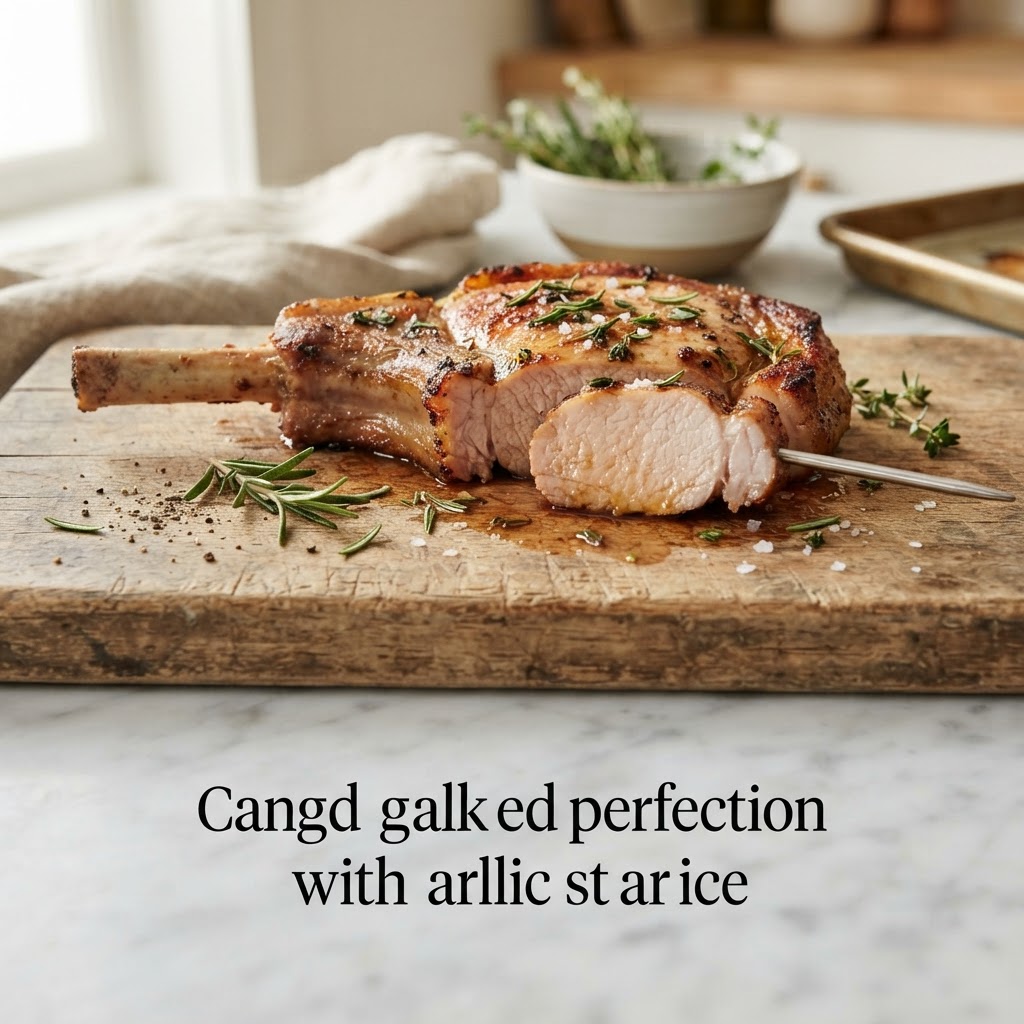
Insert an instant-read thermometer horizontally into the thickest part of the chop, aiming for the center and avoiding the bone, fat pockets, or the pan. Pork chops are ready at 145°F. After removing them from the oven, let them rest for at least 3 minutes before serving. For uneven chops, check each piece separately.
Keep the chops juicy
Pat the chops dry before seasoning so they brown instead of steaming. A lightly oiled sheet pan or skillet helps prevent sticking. If the surface is browning before the center is ready, loosely cover the pan with foil and continue baking. Resting also gives the juices time to settle, so avoid slicing immediately.