Fresh vs Frozen Spinach: How to Substitute Without Making Dishes Watery
Use 10 ounces of frozen spinach for about 1 pound fresh, then thaw and squeeze it dry for better soups, pasta, casseroles, dips, and eggs.
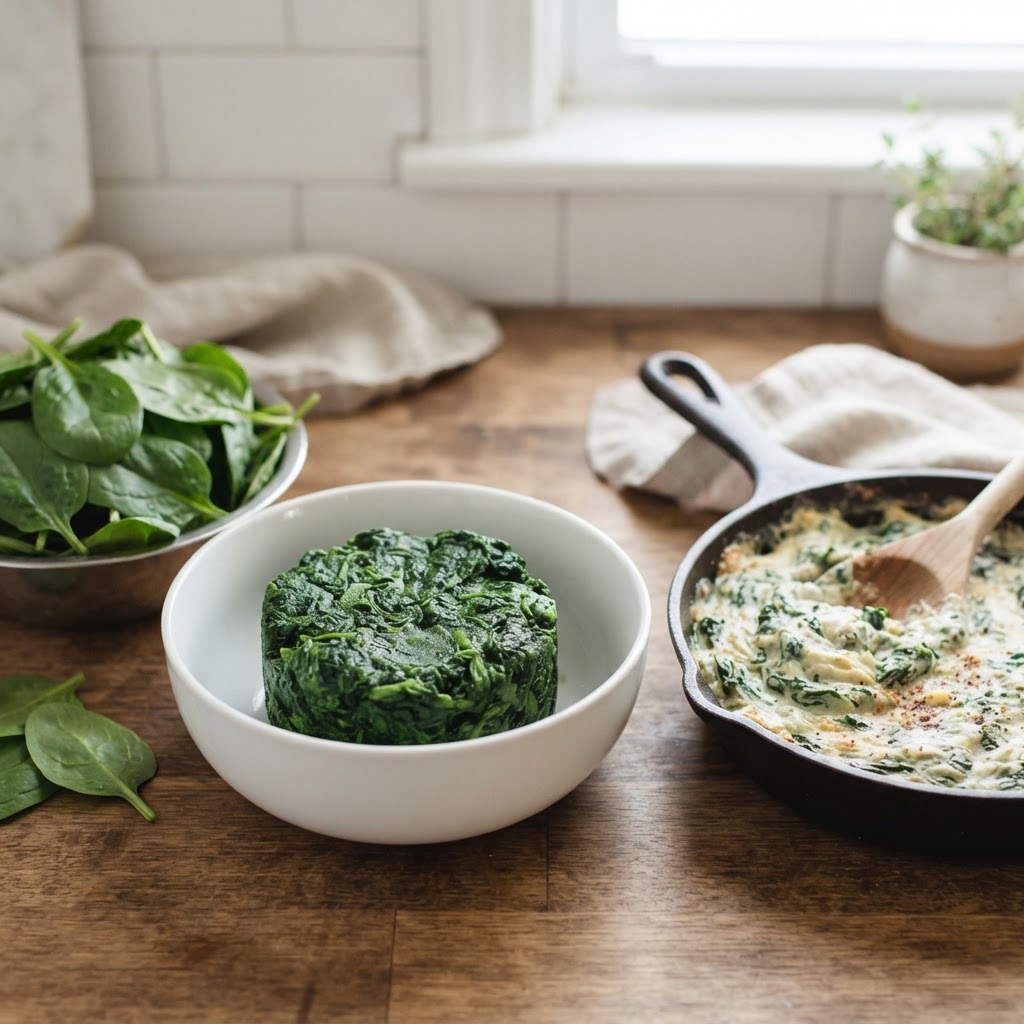
Quick reference
- Fresh spinach: 1 pound Yields about 1 cup cooked
- Frozen spinach: 10 ounces About 1½ cups thawed, before squeezing
- Usual swap: 10 oz frozen : 1 lb fresh Best for cooked dishes
- After squeezing: About 1 cup Pack loosely when measuring
The basic substitution
For most cooked recipes, use one 10-ounce package of frozen spinach in place of about 1 pound of fresh spinach. Fresh leaves shrink dramatically as they cook, while frozen spinach has already been cooked and compressed. The exact yield varies by brand and how firmly the spinach is packed, but this ratio works well for pasta, casseroles, quiche, dips, and egg dishes. If a recipe calls for cups rather than weight, measure frozen spinach after thawing and squeezing.
Thaw, drain, and squeeze
Frozen spinach is the convenient choice, but excess thawing liquid can make a filling or sauce loose. Thaw it in the refrigerator or microwave, then transfer it to a fine-mesh strainer. Press with the back of a spoon, or wrap the spinach in a clean kitchen towel and squeeze firmly over the sink. For very delicate dishes, squeeze twice. Do not rely on draining alone; spinach holds more water than it appears to.
- For dips and quiche: squeeze very dry.
- For soup: drain lightly if extra broth is welcome.
- Break apart frozen clumps before adding them.
When fresh spinach works better
Choose fresh spinach when you want visible leaves, a lighter texture, or quick wilting directly in the pan. It suits soups, sautés, omelets, and pasta dishes where the leaves can cook down with other ingredients. Rinse well and shake or spin dry first. Add fresh spinach in handfuls, allowing each addition to wilt before adding more. A large bag may look excessive at first but will reduce substantially.
When frozen spinach works better
Frozen spinach is efficient for recipes that need evenly distributed, finely textured greens. It is especially useful in spinach-artichoke dip, stuffed pasta, casseroles, quiche, baked eggs, and creamy sauces. Since it is already wilted, stir it in after thawing rather than cooking it for a long time. If the mixture still seems loose, let it sit briefly, then add a little cheese, breadcrumbs, or another recipe-approved thickener.
Adjusting recipes without watery results
If replacing fresh spinach with frozen, reduce other liquid only when the recipe was designed around fresh leaves and their cooking behavior. The safest approach is to squeeze the frozen spinach thoroughly and add it gradually. For soup, frozen spinach can go in near the end and needs only enough heating to warm through. For pasta, casseroles, quiche, dips, and egg dishes, mix in the spinach before baking and check that the filling looks moist, not runny.
- Season after mixing; squeezed spinach may need more salt.
- Cool cooked spinach briefly before combining with eggs or dairy.
- If using fresh, cook it down first when the recipe needs a firm filling.