Fresh to Dried Herbs Conversion Chart
Use a simple fresh-to-dried herb conversion chart, plus timing tips for delicate and woody herbs, to keep flavor balanced.
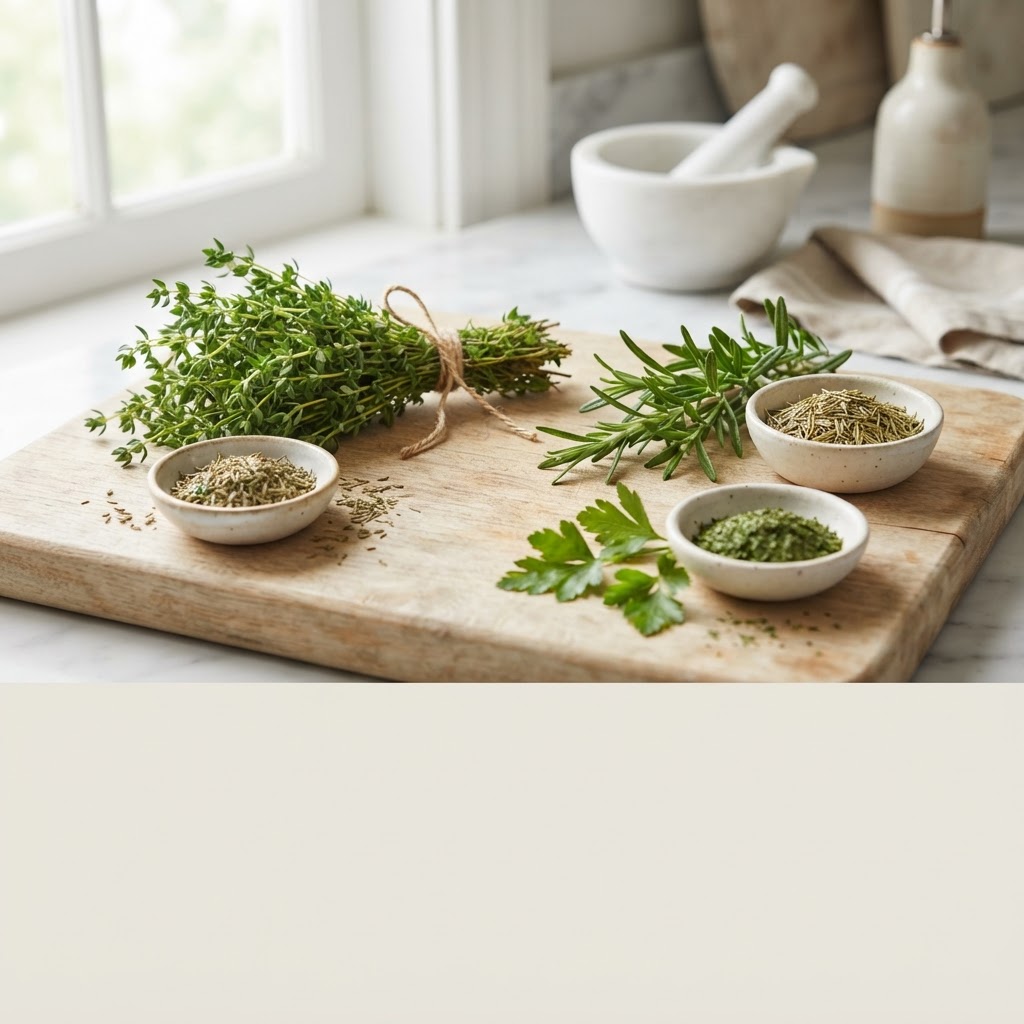
Quick reference
- Fresh herb: Dried equivalent Use about one-third as much
- 1 tablespoon fresh: 1 teaspoon dried Common 3:1 ratio
- 1 teaspoon fresh: ⅓ teaspoon dried Round slightly if needed
- Delicate herbs: Use cautiously Flavor can shift when dried
- Woody herbs: Usually convert well Often hold flavor strongly
The basic conversion
For most recipes, use one part dried herbs for every three parts fresh. That means 1 tablespoon of chopped fresh herbs equals about 1 teaspoon of dried herbs. This 3:1 fresh-to-dried rule is a starting point, not an unbreakable formula: dried herbs vary in age, brand, and intensity, while fresh herbs vary in size and flavor. If unsure, begin with a little less dried herb and adjust after cooking.
Why dried herbs need a lighter hand
Dried herbs are more concentrated by volume because their water has been removed, so they can taste stronger and earthier than fresh herbs. They also distribute differently, especially in smooth sauces or soups. Measure dried herbs before adding them, then taste near the end and add more only if the dish needs it. Crushing dried leaves gently between your fingers can release aroma before they go into the pot.
- 1 tablespoon fresh basil → 1 teaspoon dried basil
- 2 tablespoons fresh rosemary → 2 teaspoons dried rosemary
- 1 tablespoon fresh oregano → 1 teaspoon dried oregano
Delicate herbs versus woody herbs
Woody herbs such as rosemary, thyme, and sage generally make a reliable dried-herb substitution. Their sturdy leaves retain plenty of character during drying. Delicate herbs such as parsley, cilantro, dill, chives, and tarragon can lose some of their fresh, green quality, so dried versions may not taste identical. Use them when convenience matters, but consider finishing the dish with a small amount of fresh herb if available.
When to add each type
Add dried herbs earlier so they have time to soften and release flavor into soups, stews, sauces, braises, and simmered beans. Stir them into the cooking liquid or sauté them briefly with aromatics, taking care not to scorch them. Add fresh herbs later: tender leaves are best stirred in during the final minutes or scattered over the finished dish. This keeps their brighter aroma and color.
How to adjust the substitution
Start with the 3:1 ratio, then tailor it to the recipe and herb. A long-simmered dish can absorb more dried herb than a quick pan sauce. If the recipe already includes a strongly flavored ingredient, use the lower end of the range. Taste after the flavors have had time to combine, and remember that salt, acid, and heat can change how prominent an herb seems. For a fresh finish, add chopped fresh herbs just before serving rather than increasing the dried amount.