Freezing Aromatics: Onions, Celery, Carrots, Garlic, Ginger, and Mirepoix
Chopped onions, celery, carrots, garlic, ginger, and mirepoix freeze well for soups, sauces, and sautés—often straight from the freezer.
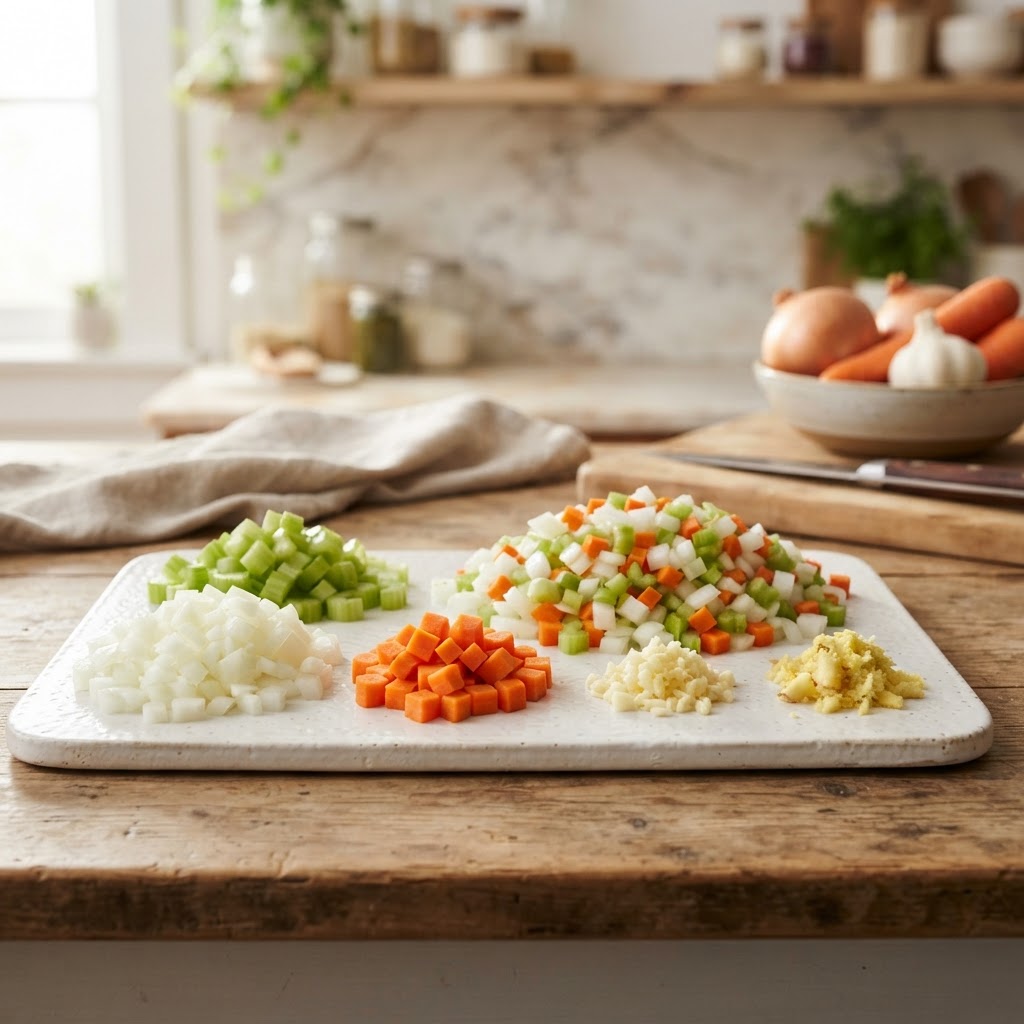
Quick reference
- Aromatic: Freezes well? Best use
- Onions: Yes Soups, sauces, sautés
- Celery and carrots: Yes Stocks, stews, braises
- Garlic and ginger: Yes Stir-fries, marinades, sauces
- Mirepoix: Yes Any cooked flavor base
What freezes well
Most chopped cooking aromatics freeze successfully, especially onions, celery, carrots, garlic, ginger, and mixed mirepoix. Freezing softens their texture, so they are best for dishes where the vegetables will cook rather than remain crisp. Onions may become softer and release moisture; celery loses its crunch; carrots stay useful but are less firm. Garlic and ginger retain their flavor well, though their texture is no longer ideal for raw preparations.
- Freeze vegetables at their freshest.
- Peel and trim before chopping.
- Avoid freezing aromatics intended for raw salads or garnishes.
Prep and portion
Wash and dry vegetables thoroughly, then chop them in the size you normally use. Spread pieces on a parchment-lined tray and freeze until firm before transferring them to an airtight bag or container. This loose-freezing step makes it easier to scoop out only what you need. Press out excess air, label the contents and date, and keep small portions ready for weeknight cooking.
- Use tablespoon- or half-cup portions for sauces and sautés.
- Freeze garlic cloves whole, chopped, or pressed into small cubes.
- Grate ginger before freezing, or freeze peeled pieces for later grating.
Freezing mirepoix
For a classic mirepoix, combine two parts onion with one part carrot and one part celery, then portion the mixture before freezing. The ratio does not need to be exact; match the balance to your usual soups, braises, or sauces. Freeze it raw for the freshest flavor and fastest prep, or sauté it first, cool it completely, and freeze it in measured portions for an already-softened base.
- Raw mirepoix is quickest for soups and stocks.
- Cooked mirepoix works well in sauces, rice dishes, and braises.
- Keep portions flat so they stack and thaw quickly.
When thawing is unnecessary
Add frozen aromatics directly to a hot pan, pot, or baking dish in most cooked recipes. Frozen onions, celery, carrots, and mirepoix can go straight into soups, stews, stocks, braises, and slow-cooker dishes. Garlic and ginger can be stirred into sauces, curries, stir-fries, and marinades while still frozen. Allow extra time for released moisture to cook off when beginning a sauté, and avoid crowding the pan.
- For sautéing, use medium-high heat and cook until excess moisture evaporates.
- For roasting, thaw and dry first if browning matters.
- Do not thaw on the counter; thaw in the refrigerator when a recipe requires it.
Best uses and limits
Frozen aromatics are a shortcut, not a replacement for fresh crunch. Use them in soups, stews, gravies, tomato sauces, casseroles, fried rice, stir-fries, stocks, and braises. Fresh is preferable for salsa, crudités, crisp salads, or dishes where raw texture leads. Once thawed, use the aromatics promptly and avoid repeatedly freezing and thawing the same portion.
- Match the cut to the finished dish before freezing.
- Keep garlic and ginger portions small for easy measuring.
- Use airtight packaging to reduce freezer odors and drying.