Fish and Shrimp Storage: Fridge Life, Freezing, and Safe Thawing
Store raw fish and shrimp in the refrigerator for 1–2 days, freeze them promptly, and thaw safely in the fridge or cold water—not on the counter.
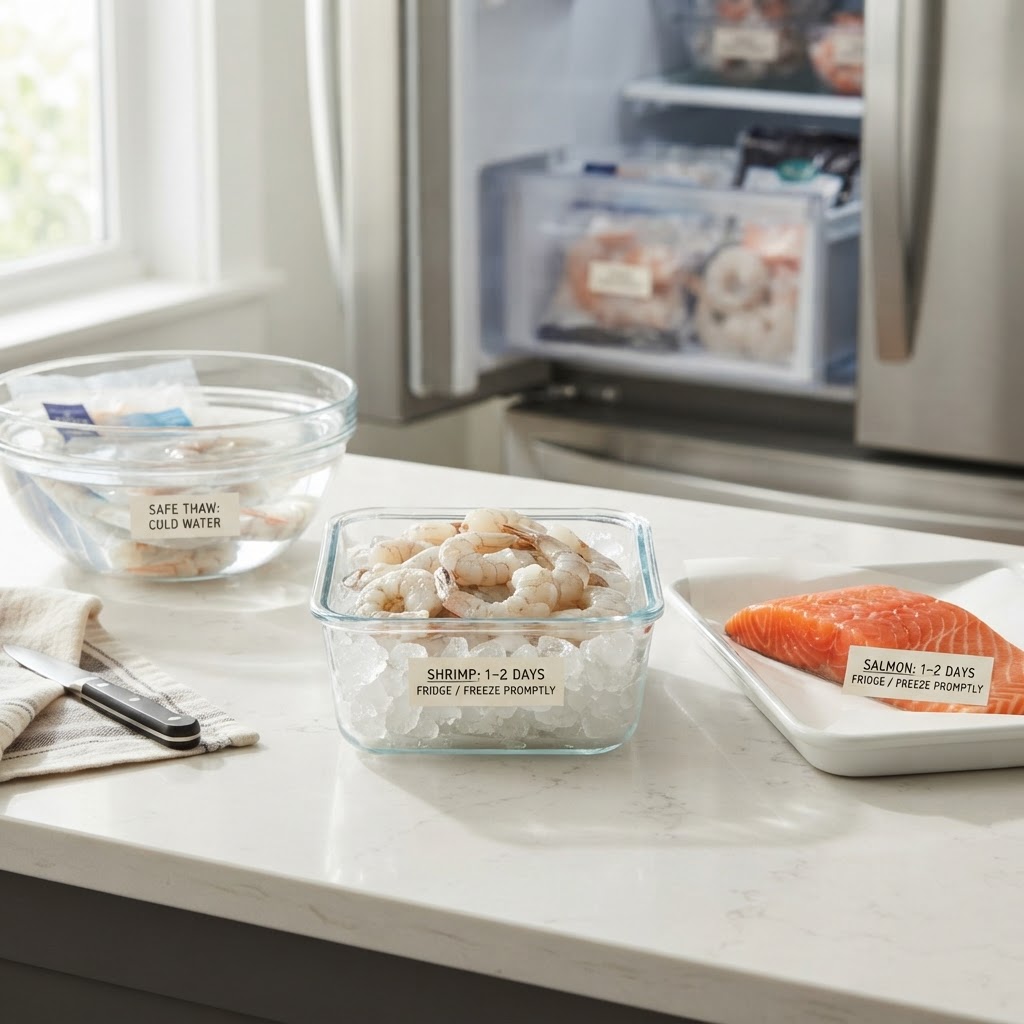
Quick reference
- Raw fish or shrimp: 1–2 days refrigerated Keep at 40°F / 4°C or below
- Cooked seafood: 3–4 days refrigerated Chill within 2 hours
- Frozen seafood: Best quality varies Wrap airtight; keep at 0°F / -18°C
- Refrigerator thawing: Overnight or longer Use a tray to catch drips
Refrigerate raw fish and shrimp promptly
Keep raw seafood at 40°F / 4°C or below and use it within 1–2 days. Store it in its original package or a sealed container on the lowest refrigerator shelf, where drips cannot reach other foods. If the package is leaking, place it inside a second container. Seafood that has been left at room temperature for more than 2 hours—or more than 1 hour when the temperature is above 90°F / 32°C—should be discarded.
- Keep seafood cold from the store to your refrigerator.
- Do not rinse raw fish or shrimp before storing.
- Use a clean, separate board and utensils for preparation.
How to store cooked seafood
Refrigerate cooked fish and shrimp within 2 hours of cooking, or within 1 hour in very hot conditions. Divide a large amount into shallow containers so it cools quickly, then cover and refrigerate. Cooked seafood keeps for about 3–4 days in the refrigerator. Reheat leftovers to 165°F / 74°C, heating only the portion you plan to eat.
- Label containers with the cooking date.
- Keep cooked seafood separate from raw seafood.
- Discard leftovers that sat out too long.
Freezing fish and shrimp
Freeze raw seafood as soon as possible if you will not use it within its refrigerator window. Remove excess air with freezer-safe wrap, a tightly sealed bag, or an airtight container; add a date label. Freeze cooked seafood the same way after it has cooled promptly. Frozen seafood remains safe while continuously held at 0°F / -18°C or below, though texture and flavor are best when used within the package’s recommended quality window.
- Make portions flat and thin for faster freezing.
- Avoid repeated thawing and refreezing.
- Discard packaging that has opened and caused freezer burn if quality is poor.
Safe ways to thaw seafood
The refrigerator is the easiest method: place sealed fish or shrimp on a tray and let it thaw gradually, usually overnight depending on thickness and quantity. For a faster option, keep seafood in a leakproof bag and submerge it in cold water, changing the water every 30 minutes; cook it immediately after thawing. Microwave thawing is suitable only when you will cook the seafood right away. Never thaw seafood on the counter.
- Cook seafood immediately after cold-water or microwave thawing.
- Do not use warm or hot water.
- Keep thawing seafood contained to prevent drips.
When to use caution
Fresh seafood should have a mild, clean smell and firm flesh. Be cautious with fish or shrimp that smells strongly sour, rancid, or ammonia-like, feels unusually slimy, has discolored patches, or comes from a swollen or leaking package. A short date or a package that has warmed does not become safe because it is cooked. When storage time or temperature is uncertain, the safest choice is to discard it.
- Do not taste seafood to test whether it is safe.
- Check the refrigerator temperature with an appliance thermometer.
- When in doubt, throw it out.