Dried Beans: Soak or Don’t Soak? A Practical Cooking Guide
Dried beans do not require soaking, but an overnight or quick soak can shorten cooking and help produce more evenly tender beans.
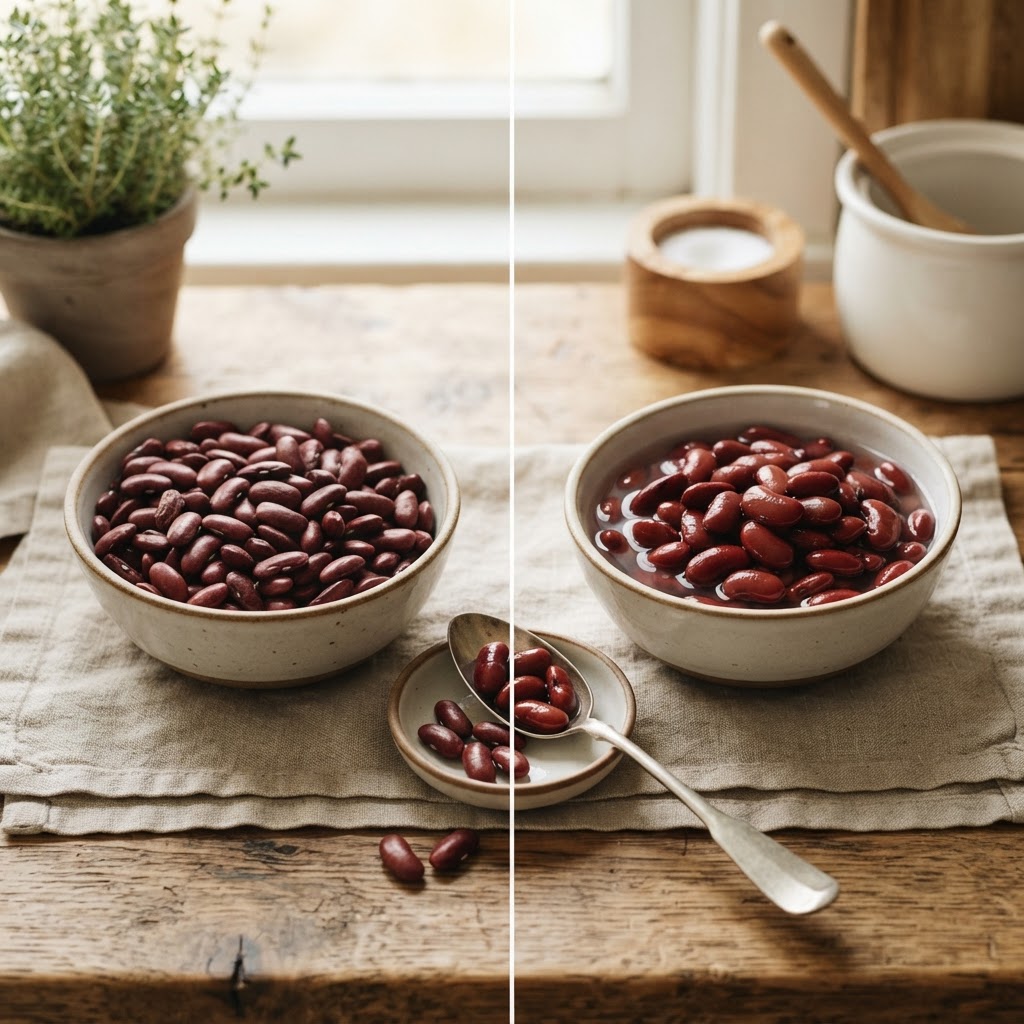
Quick reference
- Overnight soak: 8–12 hours Most even cooking; drain first
- Quick soak: Boil, rest 1 hour Useful same-day shortcut
- No soak: Cook from dry Allow extra time and water
- Add acidic ingredients: After tender Tomato and vinegar can delay softening
Do dried beans need soaking?
No. Dried beans can be cooked straight from the bag. Soaking mainly reduces the time they need on the stove and can help the centers cook more evenly. It is useful when you want predictable timing, but it is not a requirement for good beans. Older beans may remain firm regardless of method; for troubleshooting stubborn beans, see QuickDinner’s “Why Beans Stay Tough.”
Overnight soaking
Cover sorted, rinsed beans with plenty of cold water and refrigerate them for 8 to 12 hours. They will expand substantially, so use a large bowl and enough water to keep them submerged. Drain and rinse before cooking, then cover with fresh water or stock by about 1 to 2 inches. This is the most hands-off method and usually gives the most even texture.
- Discard cracked or shriveled beans while sorting.
- Keep the soaking bowl refrigerated.
- Do not cook in the soaking water if you want a cleaner-tasting pot.
Quick soaking and no-soak cooking
For a quick soak, cover rinsed beans with several inches of water, bring them to a boil, boil for 2 minutes, then remove from the heat and rest for 1 hour. Drain, rinse, and cook in fresh water. For no-soak beans, rinse and simmer them directly; expect cooking to take longer and vary with the bean’s age and size. Keep the pot at a gentle simmer rather than a hard boil.
Timing, texture, and seasoning
Start checking beans well before the expected finish. Depending on the variety and age, soaked beans may take roughly 45 minutes to 1½ hours, while unsoaked beans can take about 1½ to 3 hours or longer. Add salt to the cooking liquid from the beginning or once it reaches a simmer; salted water seasons the beans as they cook and does not automatically prevent tenderness. Add more salt near the end if needed.
When to add acidic ingredients
Tomatoes, wine, vinegar, citrus juice, and other acidic ingredients can keep bean skins firm if added before the beans are tender. Cook the beans until nearly or fully soft, then stir in acidic ingredients and continue simmering until the flavors come together. Add aromatics such as onion, garlic, bay leaf, and herbs earlier for a more seasoned cooking liquid. If beans stay hard after prolonged cooking, use the linked troubleshooting guide rather than simply adding more acid or heat.