Cross-Contamination in a Small Kitchen: A Practical Raw-Meat Workflow
Prepare raw meat safely in a small kitchen by separating clean and dirty zones, controlling packaging, washing hands, and cleaning in sequence.
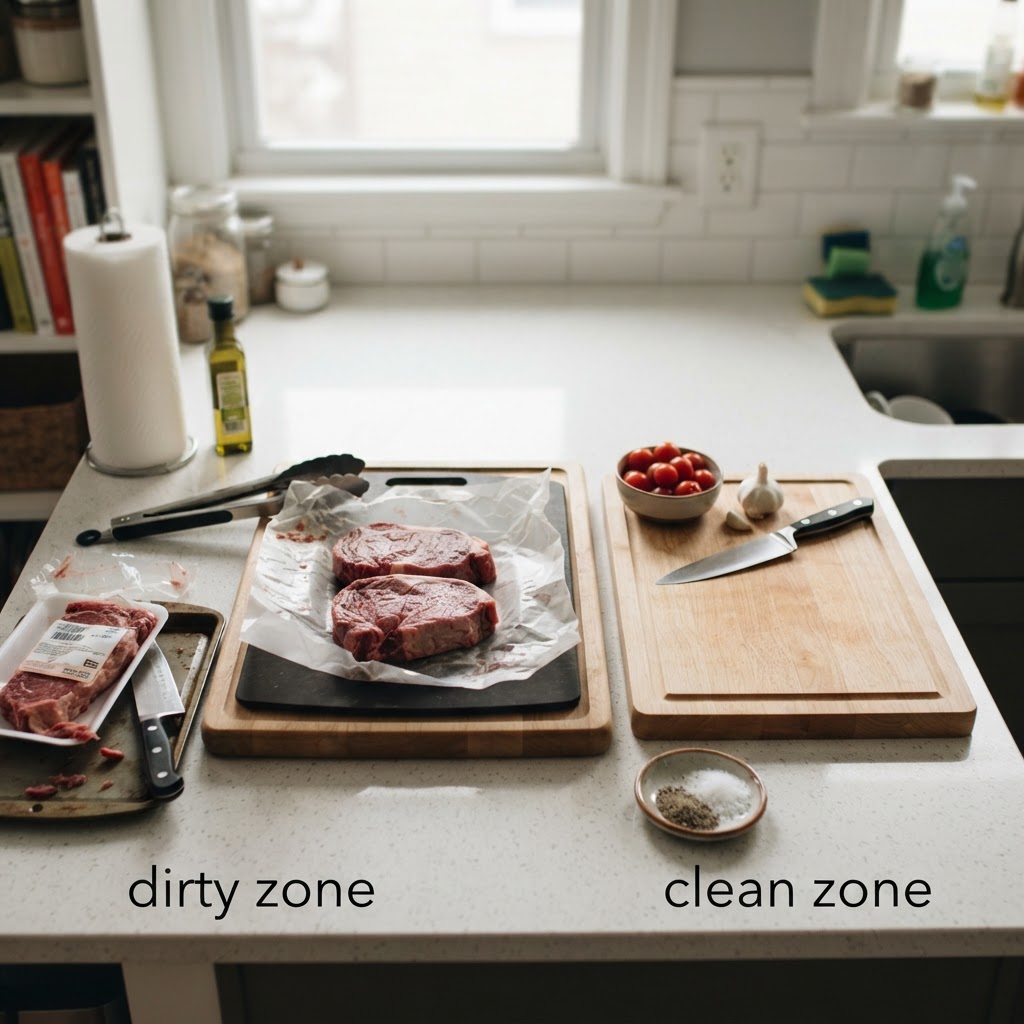
Quick reference
- Before handling: Clear a clean zone Set out tools first
- Raw-meat tools: Use one board and knife Keep them in the dirty zone
- Hands: Wash with soap and water Before touching clean items
- Cooked food: Use a clean plate Never reuse the raw-meat plate
- Leftovers: Refrigerate within 2 hours Within 1 hour above 90°F / 32°C
1. Create two zones before opening the package
In a small kitchen, the safest setup is a time-and-space sequence rather than separate counters. Clear one section for clean items: the serving plate, seasonings, thermometer, and cooking utensils. Reserve the other for the raw package, board, knife, and waste. Move anything you will not use out of the way. If possible, place the clean zone farther from the sink and trash so splashes and drips do not cross your work area.
- Keep ready-to-eat food covered or out of the room.
- Set out a clean plate for the cooked meat.
- Have paper towels and soap ready before starting.
2. Control the package, board, and knife
Open the meat over the raw-food zone, not beside a salad, bread, or finished side dish. Put the empty wrapper directly into the trash or a sealed bag; do not leave it on the counter. Use one cutting board and knife for the raw meat, and keep their handles from touching clean surfaces. If you need to trim several pieces, keep them on the same board and place the prepared pieces in a pan or bowl that will go straight to cooking.
- Do not rinse raw meat; splashing can spread contamination.
- Use a rimmed tray or pan to contain juices.
- Keep raw-seasoning containers from touching the meat or board.
3. Season without contaminating the kitchen
Measure spices into a small bowl before touching the meat, or wash your hands before reaching into a shared container. If you season directly from a jar, hold the jar away from the raw meat and avoid touching its lid or shaker with meat-covered fingers. For a marinade, reserve a clean portion before adding raw meat. Never use leftover marinade on cooked food unless it is brought to a full boil first.
- Use separate tongs for raw and cooked food.
- Do not return unused seasoning from the raw zone to its original container.
- Wash hands after handling packaging, even if the meat itself was not touched.
4. Wash hands and move food with a clean plate
Wash hands with soap and water after touching raw meat, its package, the board, or the knife. Clean between fingers and around nails, then dry with a clean towel or disposable paper towel. Do not rely on a quick rinse. When the meat is ready, put it on a clean pan or plate; never reuse the plate that held it raw. After placing the meat in the oven, pan, or grill, keep cooked-food tools and raw-food tools separate.
- Turn handles and appliance controls with a clean hand or paper towel.
- Keep cooked meat away from raw juices.
- Use a thermometer in the thickest part when doneness is uncertain.
5. Cook, store, and clean in the right order
Cook poultry to 165°F / 74°C; ground beef, pork, lamb, and veal to 160°F / 71°C; whole cuts of beef, pork, lamb, and veal to 145°F / 63°C followed by a 3-minute rest; and fish to 145°F / 63°C. Temperatures can vary with thickness and appliance, so check the food itself. Refrigerate cooked perishables within 2 hours, or within 1 hour when the room is above 90°F / 32°C. Keep general leftovers refrigerated for 3–4 days and reheat them to 165°F / 74°C.
- Wash the board, knife, tray, and counter with hot soapy water after cooking.
- Sanitize only after cleaning, following the product label.
- Wash reusable towels and replace visibly soiled ones.