Couscous, Israeli Couscous, and Orzo: What’s the Difference?
Couscous is steamed semolina, while Israeli couscous and orzo are pasta; compare their size, cooking methods, textures, and best uses.
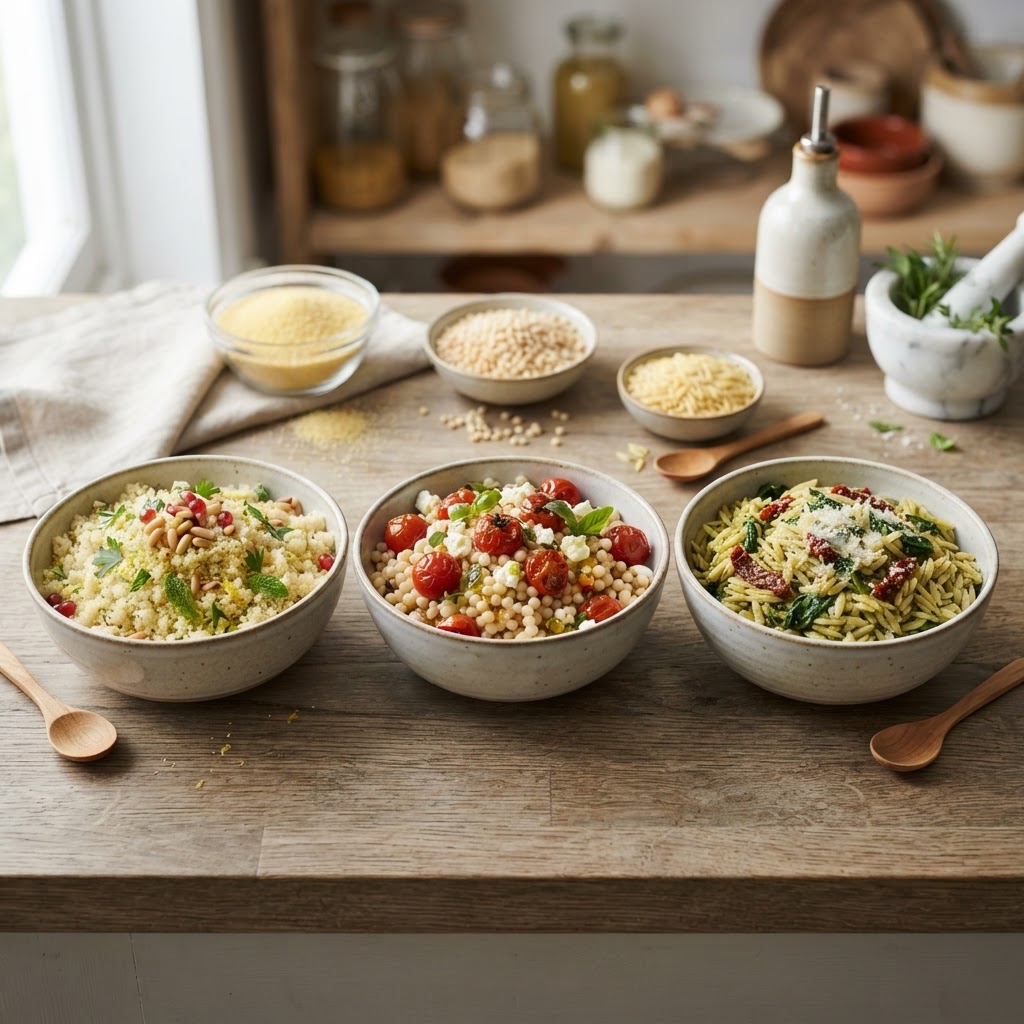
Quick reference
- Traditional couscous: Tiny steamed semolina Fluffy; usually rehydrated
- Israeli couscous: Larger toasted pasta pearls Chewy; simmered
- Orzo: Rice-shaped pasta Tender; simmered like pasta
The short answer
Traditional couscous, Israeli couscous, and orzo may look similar in a bowl, but they are not the same ingredient. Traditional couscous is made from semolina granules that are rolled and steamed. Israeli couscous—also called pearl couscous—is a larger, toasted pasta. Orzo is also pasta, shaped like oversized grains of rice. That difference affects whether you steep, simmer, drain, or cook the starch like a small grain.
Traditional couscous
Traditional couscous consists of very small semolina granules. It cooks quickly because it is generally pre-steamed before packaging: pour over hot broth or water, cover, and let it stand according to the package directions, then fluff with a fork. The result is light and granular rather than chewy. Use it under roasted vegetables, alongside stews, or in salads with herbs, lemon, and chopped vegetables.
- Best texture: light and fluffy
- Typical method: rehydrate with hot liquid
- Ideal for: quick sides, salads, and saucy dishes
Israeli or pearl couscous
Israeli couscous is a pasta product made from wheat flour or semolina and formed into larger spheres before being toasted. It needs a gentle simmer, much like other small pasta, and develops a springy, pleasantly chewy texture. It works well in warm salads, pilafs, soups, and one-pan meals. Toasting it briefly in oil before adding liquid can deepen its flavor, though it is optional.
- Best texture: chewy and plump
- Typical method: simmer in liquid until tender
- Ideal for: pilafs, bowls, soups, and warm salads
Orzo
Orzo is pasta cut into a rice-like shape, not a grain. It can be boiled in plenty of salted water and drained, or cooked absorption-style in broth, where it becomes especially creamy. Its small shape blends easily into soups, baked dishes, pasta salads, and skillet meals. Because orzo is narrower and flatter than pearl couscous, it usually feels more like tender pasta than distinct chewy pearls.
- Best texture: tender and smooth
- Typical method: boil and drain or cook in broth
- Ideal for: soups, baked pasta, salads, and skillet dishes
Can you substitute one for another?
Sometimes, but expect a different result. Traditional couscous is the quickest option and will not provide the chew of pearl couscous or the pasta-like bite of orzo. Pearl couscous can replace orzo in salads, soups, and pilafs, while orzo can stand in for pearl couscous when shape matters less than a tender pasta texture. Adjust the liquid and cooking time to the package directions rather than using a one-to-one method.
How to choose
Choose traditional couscous when you need a fast, fluffy base for a saucy meal. Pick Israeli couscous for a more substantial, chewy grain-bowl texture—remember that it is pasta, despite its name. Choose orzo when you want a small pasta that carries broth, dressing, or a creamy sauce. For more ideas, pair these ingredients with QuickDinner’s grain recipes and pasta recipes, swapping only when the cooking method fits.