Cooked Beans and Lentils: How to Store, Freeze, and Reheat Them
Store cooked beans and lentils in the fridge for 3–4 days, or freeze portioned servings with enough liquid to protect texture.
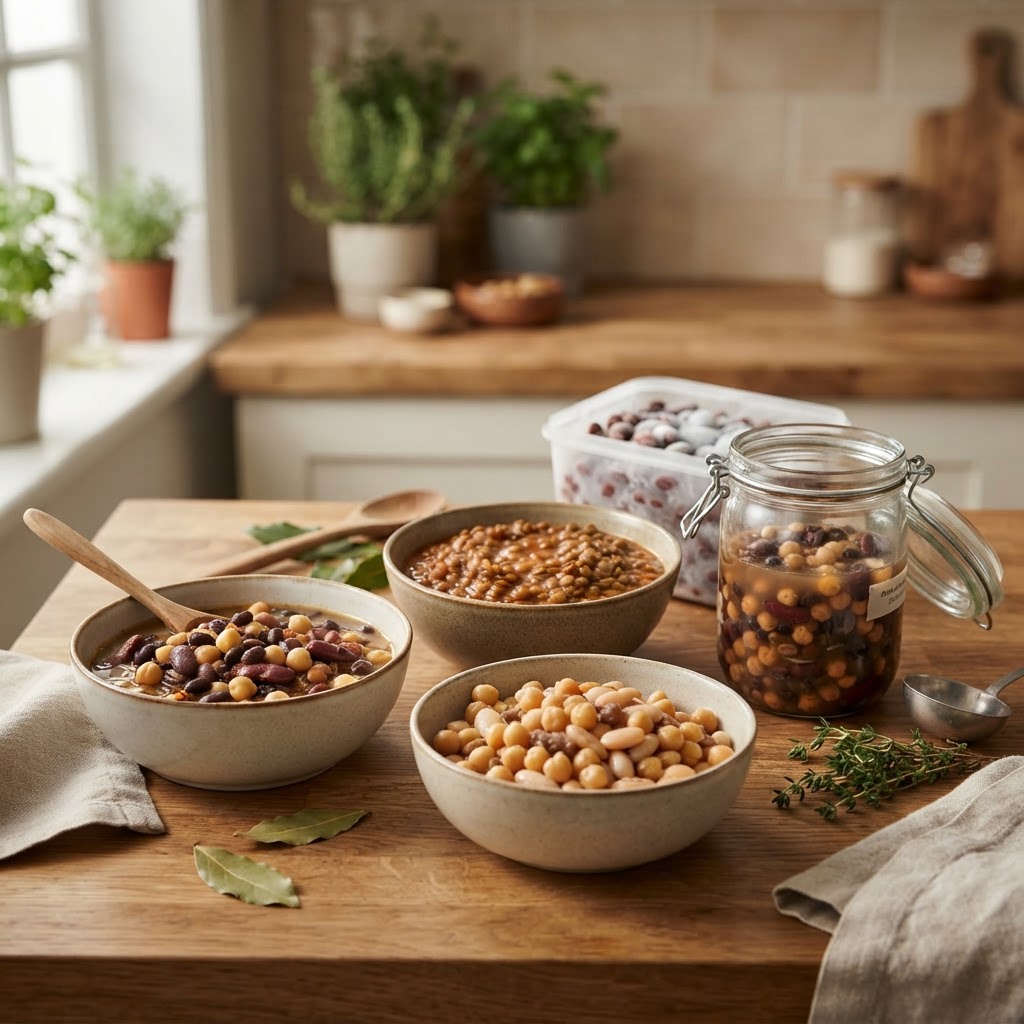
Quick reference
- Fridge: 3–4 days Use sealed, shallow containers
- Freezer: Up to 3 months Best quality when well packed
- With liquid: Beans, soups, curries Helps prevent drying
- Without liquid: Salads, bowls Drain and cool thoroughly
- Reheat: 165°F / 74°C Add liquid as needed
Cool and refrigerate promptly
Move cooked beans or lentils into shallow containers so they cool quickly, then refrigerate within 2 hours—or within 1 hour when the room temperature is above 90°F / 32°C. Keep them covered and use within 3–4 days. Label the container with the date, especially when storing several batches. Do not leave a large, hot pot to cool at room temperature for extended storage.
Choose the right storage liquid
For beans destined for soups, stews, or curries, store them with some of their cooking liquid or sauce. The liquid helps keep skins from drying and makes reheating gentler. For salads and grain bowls, drain well and cool the legumes before packing; excess liquid can make vegetables, grains, or dressings watery. Reserve a little cooking liquid separately if you may need to loosen the food later.
- Beans in broth: cover with liquid.
- Beans for salads: drain and pat dry if needed.
- Lentils in sauce: store with the sauce.
Freeze in useful portions
Freeze cooked beans and lentils in meal-sized portions rather than one large block. Leave a little room in rigid containers because liquid expands, or press excess air from freezer bags and freeze them flat. Include cooking liquid for soups, saucy beans, and curries; freeze drained legumes for salads and grain bowls. Mark the contents and date, and use within about 3 months for the best texture and flavor.
- Freeze one- or two-meal portions.
- Cool completely before sealing.
- Freeze sauce and legumes together when they will be served together.
Thaw without damaging texture
The refrigerator is the most even way to thaw a frozen portion, usually overnight. For a quicker option, place the sealed container in cold water, changing the water as needed, or transfer the frozen contents directly to a saucepan if they are going into soup or curry. Avoid leaving food to thaw on the counter. Lentils can soften more than beans, so handle thawed portions gently.
Reheat gently and adjust
Warm beans or lentils in a covered saucepan over low to medium-low heat, stirring occasionally. Add a splash of water, stock, or reserved cooking liquid if the mixture looks dry. Microwave in a covered, microwave-safe container, stirring halfway through and adding liquid as needed. Reheat leftovers to 165°F / 74°C, and stop once hot; prolonged boiling can split beans and turn lentils mushy.
- Soup or curry: reheat slowly with extra liquid.
- Grain bowls: warm separately, then assemble.
- Salads: thaw in the refrigerator and serve chilled or briefly warmed.
Match storage to the next meal
Think about the finished dish before packing. Whole beans with liquid are ready for chili, soup, or a quick skillet meal. Firm, well-drained beans work best in salads and bowls. Lentils freeze especially well in thick soups, dal, and curries, while plain lentils are useful for salads when thawed carefully. If a batch becomes softer after freezing, use it in a blended soup, spread, or saucy dish rather than forcing it into a crisp-textured recipe.