Canned Tomatoes Explained: Whole, Crushed, Diced, Puree, Sauce, and Paste
Choose canned tomatoes by texture and concentration: use whole for control, crushed for smooth sauces, and paste when you need deep flavor fast.
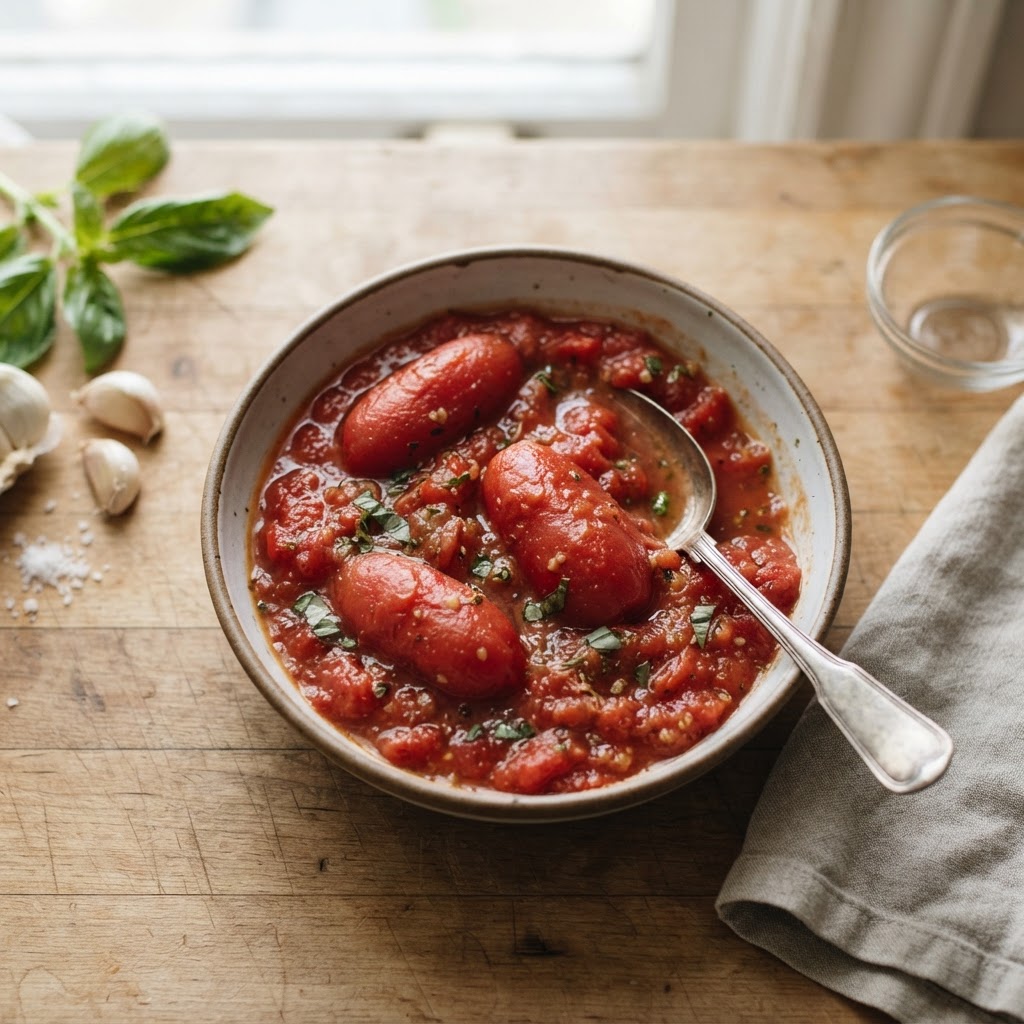
Quick reference
- Whole: Chunky, versatile Best all-purpose choice
- Crushed: Coarse, spoonable Sauces and soups
- Diced: Firm pieces Chili and casseroles
- Puree: Smooth, concentrated Braises and sauces
- Paste: Very concentrated Builds depth and color
Which canned tomato should you use?
Choose based on the texture you want and how long the dish will cook. Whole tomatoes offer the most control: crush them by hand or with a spoon as they simmer. Crushed tomatoes make a textured, nearly ready-to-use sauce. Diced tomatoes keep distinct pieces, while puree gives a smooth, thicker base. Tomato sauce is seasoned and pourable; paste is intensely concentrated and used in small amounts.
- For pasta sauce: whole, crushed, or puree.
- For chili and casseroles: diced or crushed.
- For browning and braises: add tomato paste.
Whole, crushed, and diced tomatoes
Whole tomatoes are the flexible pantry staple for QuickDinner pasta sauces, soups, and braises. They may be packed in juice or puree, so check the label if liquid matters. Crushed tomatoes vary from smooth to chunky by brand, making them convenient for pizza sauce, tomato soup, and quick pasta. Diced tomatoes are cut before canning and often contain calcium chloride, which helps them stay firm. That is useful in chili or casseroles, but they may soften more slowly in a smooth sauce.
- Crush whole tomatoes for a rustic sauce.
- Use diced tomatoes when pieces should remain visible.
- If diced tomatoes resist breaking down, switch to crushed or puree.
Puree, sauce, and paste
Tomato puree is smooth and usually thicker than crushed tomatoes, making it useful for silky sauces, soups, braises, and casseroles. Canned tomato sauce is thinner and commonly seasoned with salt, herbs, or spices; it is convenient, but its flavor profile is less neutral. Tomato paste has the highest concentration of the group. Cook it briefly in oil with aromatics before adding liquid to deepen a chili, braise, or pasta sauce. Because brands differ, taste before adding extra salt.
- Replace sauce with puree plus a little water if needed.
- Replace puree with blended whole or crushed tomatoes.
- Replace one cup of sauce with about ¾ cup puree plus ¼ cup water.
Practical substitutions
When a recipe calls for whole tomatoes, crushed tomatoes are the easiest direct substitute, though the finished sauce will be more uniform. Blend whole or diced tomatoes for a smooth puree. To replace diced tomatoes, cut whole tomatoes into pieces and use their canning liquid. Tomato paste is not a one-for-one substitute for sauce or puree; thin it with water or stock, then adjust seasoning. In pizza, use puree or crushed tomatoes for a thick spread and avoid overly watery sauce.
- Strain or reduce tomatoes when a filling must stay thick.
- Add water gradually when thinning paste or puree.
- Check for added herbs before seasoning the dish.
A quick choice by dish
For QuickDinner pasta sauces, choose whole tomatoes when you want a rustic texture and crushed or puree for a smoother finish. Soups benefit from crushed tomatoes or puree, depending on whether you want body or visible texture. Chili usually works best with diced tomatoes plus a spoonful of paste. Use whole or puree in braises, paste in the flavor-building stage, and crushed or puree for pizza. Casseroles generally need thicker tomatoes so the filling does not turn watery.
- Smooth result: puree or blended whole tomatoes.
- Visible tomato pieces: diced.
- Deep tomato flavor: paste plus another canned tomato.