Cajun vs Creole Cooking: Seasonings, Ingredients, and Classic Differences
Cajun and Creole cooking share Louisiana roots, but differ in setting, flavor emphasis, ingredients, and classic dishes such as jambalaya and gumbo.
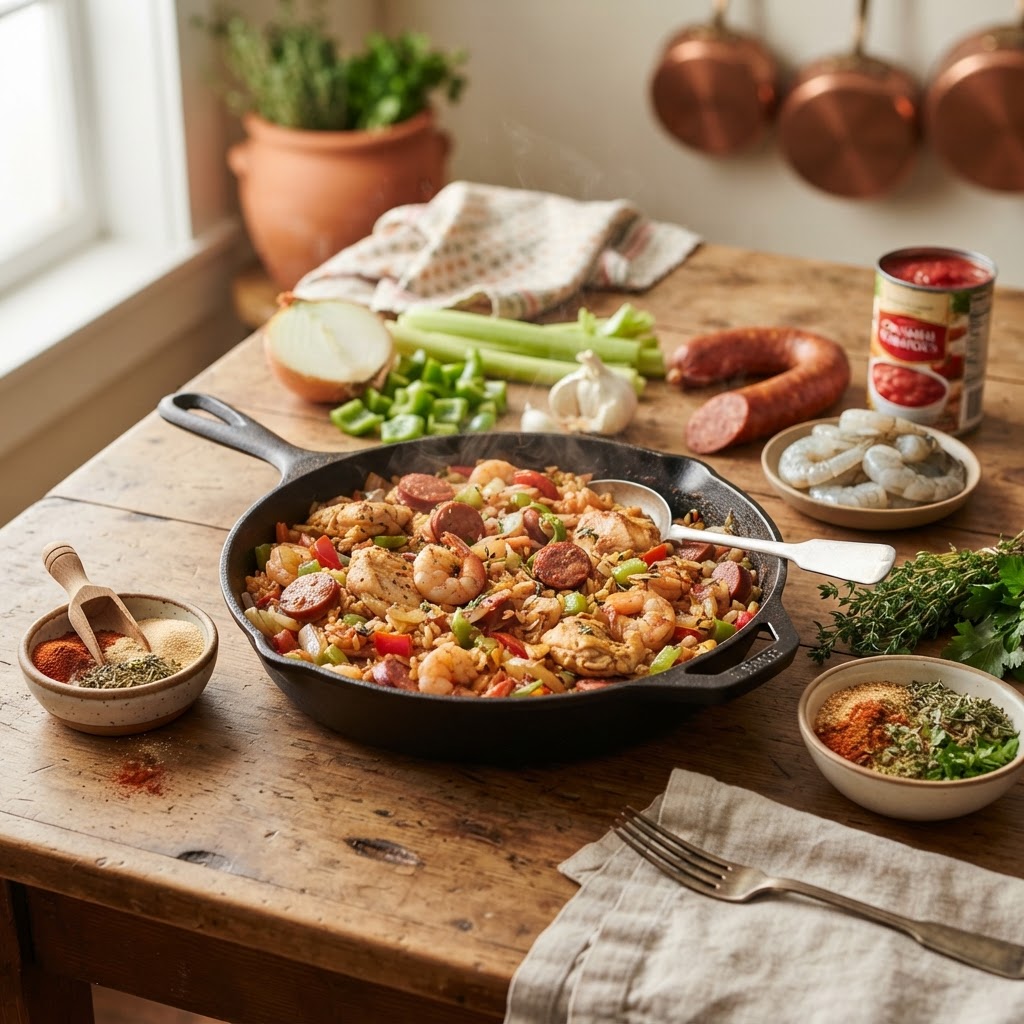
Quick reference
- Roots: Rural southwest Louisiana vs. urban New Orleans Both traditions overlap
- Cooking base: Onion, celery, bell pepper The Louisiana “holy trinity”
- Typical emphasis: Smoky, rustic, hearty vs. layered, aromatic, refined Not a strict rule
- Classic examples: Cajun jambalaya, boudin vs. Creole gumbo, shrimp Creole Recipes can cross traditions
The short answer
Cajun and Creole cooking are closely related Louisiana traditions, not opposite cuisines divided by one ingredient. Cajun food grew from rural communities, especially in Acadiana, and often centers on practical one-pot meals, smoked meats, seafood, and bold seasoning. Creole cooking developed strongly in New Orleans, where West African, French, Spanish, Caribbean, Italian, and Indigenous influences met. It often shows more varied ingredients and layered sauces. In modern kitchens, the boundaries frequently overlap.
Shared foundations: the flavor base
Both styles commonly begin with the Louisiana holy trinity: onion, celery, and bell pepper. Garlic, stock, herbs, rice, seafood, chicken, and sausage appear across both traditions. A roux may deepen gumbo, étouffée, or other dishes, while tomatoes may appear depending on the recipe and local tradition. The best way to identify a style is to consider the entire dish—its history, technique, ingredients, and setting—not whether it contains tomatoes or another single food.
- Build flavor gradually: brown meats, soften the vegetables, then add liquid.
- Use stock or seafood broth when the recipe calls for a fuller base.
- Treat “Cajun” and “Creole” seasoning blends as starting points, not interchangeable formulas.
Seasonings and flavor differences
Cajun seasoning often leans direct and peppery, with paprika, black pepper, cayenne, garlic, onion, and dried herbs. Creole seasoning can be similarly savory but may feel more herb-forward and aromatic, reflecting the broader culinary influences of New Orleans. Salt levels vary widely among commercial blends, so taste before adding more. For Cajun seafood, chicken, or sausage recipes, season in layers rather than relying on a heavy coating at the end.
- Cajun profile: pepper, smoke, garlic, paprika, and heat.
- Creole profile: herbs, aromatics, paprika, and balanced heat.
- Adjust cayenne separately when serving guests with different spice preferences.
Classic dishes to know
Cajun jambalaya commonly cooks rice with meat, sausage, or seafood in one pot, allowing the grains to absorb the seasoned cooking liquid. Cajun dishes also include boudin, rice-and-gravy preparations, seafood boils, and hearty stews. Creole examples include shrimp Creole, chicken Creole, red beans and rice, and many versions of gumbo. Even these labels are flexible: jambalaya has Creole and Cajun interpretations, and gumbo changes substantially from kitchen to kitchen.
How to choose a style for dinner
Choose a Cajun direction when you want a rustic, filling meal built around browned sausage, chicken, seafood, rice, or a dark roux. Choose a Creole direction when you want a more sauce-centered dish with tomatoes, seafood, herbs, or a broader mix of cultural influences. For either approach, start with the trinity, control the salt in your seasoning blend, and let the main ingredient shape the final balance. That gives you a useful distinction without treating tradition as a rigid rule.