Brown Sugar vs White Sugar in Baking: Texture, Browning, and Moisture
Brown sugar adds moisture, chew, and deeper flavor; white sugar encourages crisper edges, more spread, and a cleaner sweetness in baked goods.
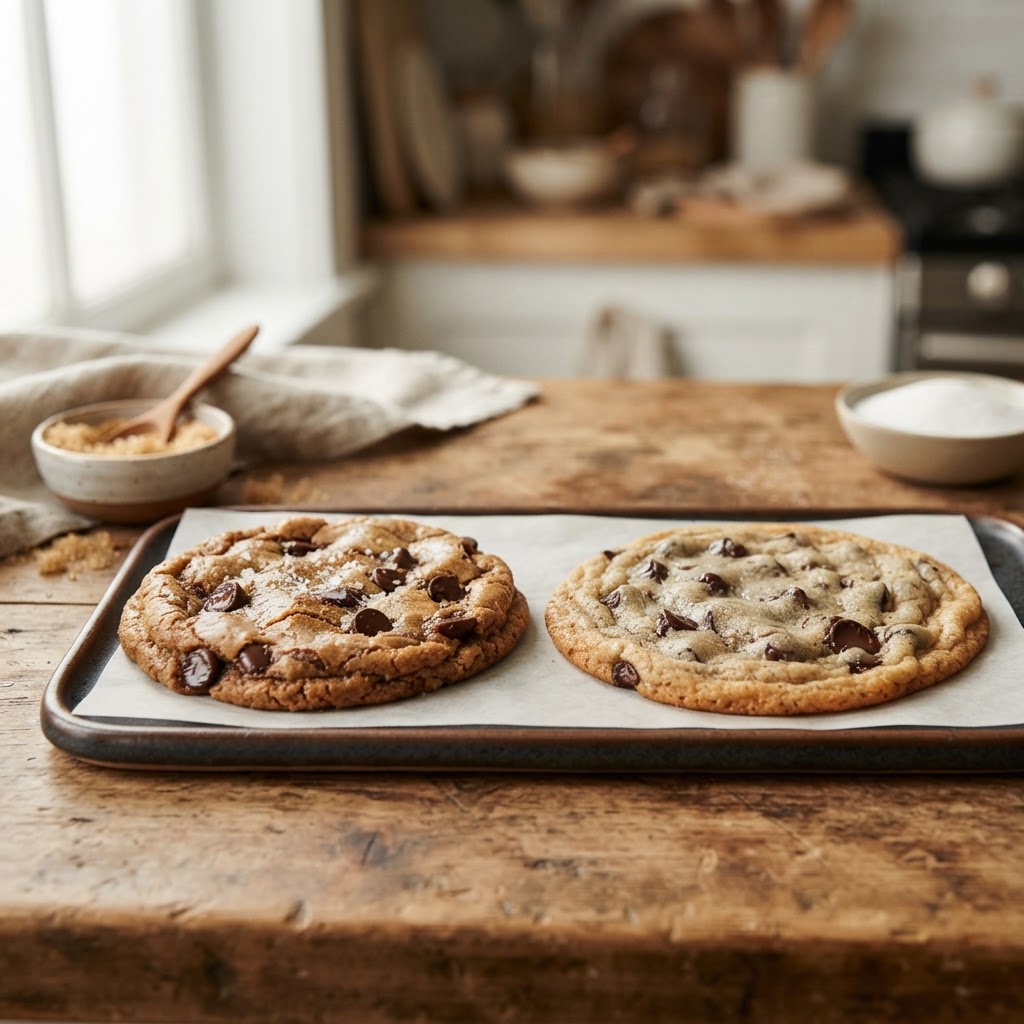
Quick reference
- Brown sugar: Moister, chewier Deeper molasses flavor
- White sugar: Crisper, lighter Cleaner sweetness
- More brown sugar: Darker browning Often thicker cookies
- More white sugar: More spread Can create crisp edges
The short answer
Replacing white sugar with brown sugar usually makes baked goods moister, chewier, darker, and more warmly flavored. Replacing brown sugar with white sugar generally produces a drier, crisper result with a lighter color and cleaner sweetness. The swap is not always one-to-one in texture: sugar affects moisture, spread, structure, and browning, so the same amount can behave differently in cookies, cakes, and quick breads.
Cookies: spread, chew, and browning
Brown sugar’s added moisture tends to make cookies softer and chewier, while its molasses flavor gives them a fuller taste and darker color. White sugar usually promotes a crisper texture and can encourage more spread, especially in doughs with plenty of butter. A full swap may change the cookie’s shape as well as its flavor; if the recipe is designed around one sugar, start by replacing only half.
- For chewy centers: use more brown sugar.
- For crisp edges: use more white sugar.
- Chill dough if a brown-sugar swap spreads more than expected.
Cakes and quick breads
In cakes and quick breads, brown sugar adds moisture and a mild caramel note, making the crumb feel softer and more substantial. White sugar gives a lighter color and a more neutral flavor. A full brown-sugar substitution can make a delicate cake seem heavier or darker, while replacing brown sugar with white may leave a loaf less moist and less richly flavored. Partial substitution is usually the safest way to preserve the original crumb.
Sauces and other cooked mixtures
For caramel, barbecue sauce, glazes, and streusel, brown sugar contributes molasses flavor and a darker finish; white sugar gives a cleaner sweetness and a paler result. In a sauce where sugar dissolves completely, texture changes may be modest, but flavor and color still shift. Brown sugar can also make a glaze taste deeper, while white sugar keeps fruit sauces and simple syrups more restrained.
When to substitute—and when not to
Use a full swap when the changed result suits the dish: brown sugar in a chewy cookie or glaze, white sugar in a crisp cookie or light fruit sauce. Choose a partial substitution when structure matters, such as in sponge cakes, muffins, and quick breads. Start with a 50–50 blend, then adjust on the next batch. If using brown sugar, pack it firmly when measuring; granulated sugar is measured by volume without packing.
- Best full swap: flavor-forward cookies, sauces, and glazes.
- Best partial swap: cakes, muffins, and quick breads.
- Expect color and flavor to change even when texture barely does.