Basic Roux Ratio: Butter to Flour
Use a practical roux ratio and the right cooking time for white, blond, or brown roux to make smooth sauces and gravies without raw-flour flavor.
Quick reference
- Roux style: Typical color Best for
- White: Pale cream Béchamel, cream sauces
- Blond: Light golden Velouté, gravies
- Brown: Deep brown Gumbo, hearty sauces
- Starting ratio: 1:1 by weight Fat to flour
The basic roux ratio
Use equal parts butter and flour by weight as your baseline: 1 ounce (28 g) butter with 1 ounce (28 g) all-purpose flour. This produces a versatile roux for thickening sauces, soups, and gravies. Volume measurements are less exact because flour packs differently, but roughly 1 tablespoon butter to 2 tablespoons flour is a workable small-batch estimate. Adjust the finished sauce with more liquid or roux as needed.
How to make it
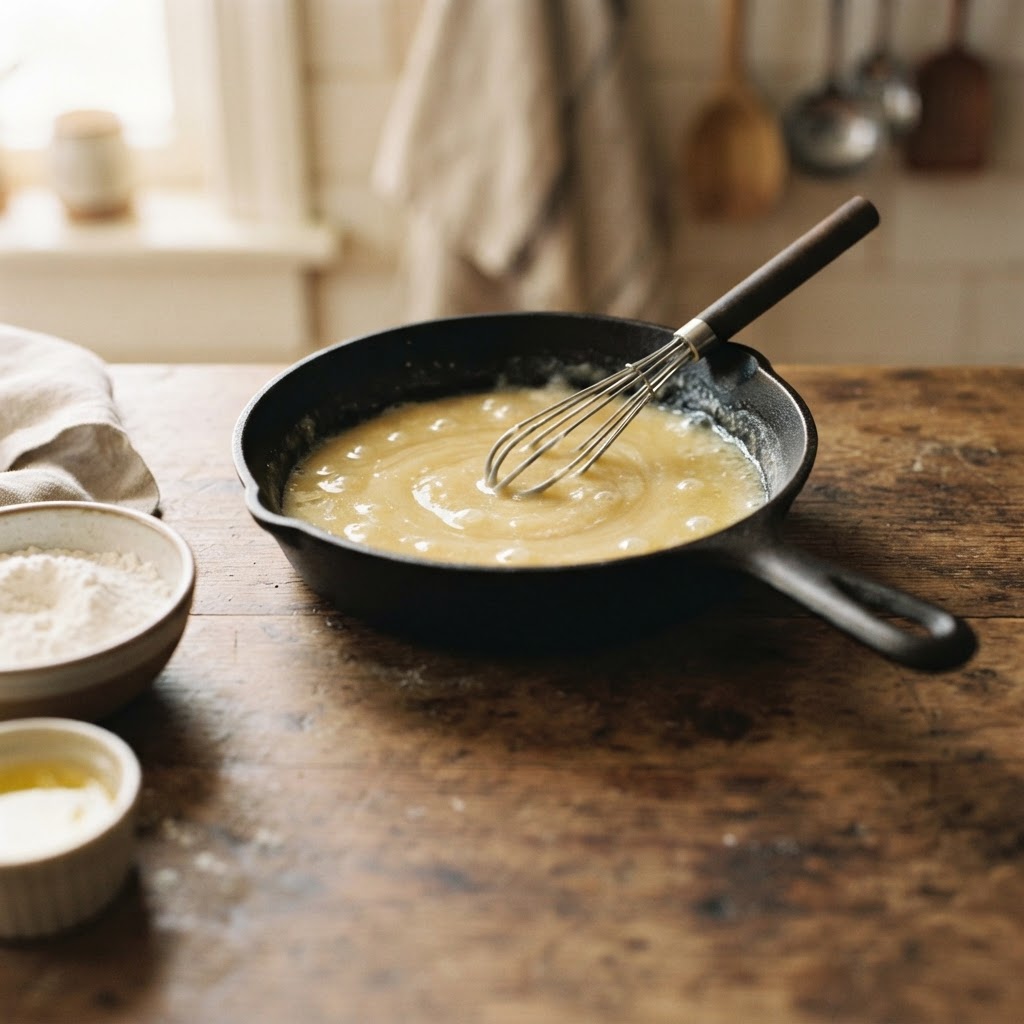
Melt the butter over medium-low to medium heat, then whisk in the flour until smooth. Cook the mixture while whisking or stirring so the flour loses its raw taste. Keep the heat moderate: butter can brown quickly, and flour can scorch around the edges. Once the roux reaches the color you want, begin adding your liquid gradually, whisking constantly after each addition until smooth before adding more.
- Use a wide, heavy saucepan for even cooking.
- Add warm or room-temperature liquid when possible to make blending easier.
- Scrape the corners of the pan so no flour remains uncooked.
White, blond, and brown roux
The roux color determines both flavor and thickening power. A white roux is cooked briefly, just until the raw flour smell disappears, and is ideal for béchamel and other pale cream sauces. A blond roux cooks longer until lightly golden, adding a gentle toasted flavor for velouté or gravy. A brown roux is cooked to a deeper brown for robust dishes such as gumbo, but it thickens less, so a larger amount may be needed.
Adding liquid without lumps
Whisk in the liquid a little at a time rather than pouring it all in at once. Start with a splash to loosen the roux into a smooth paste, then gradually increase the additions while whisking. Once the sauce is fluid, you can add the remaining liquid more quickly. Bring it to a gentle simmer and cook until thickened; the exact time depends on the amount, pan, and liquid used.
Adjusting the finished sauce
If a sauce is too thick, whisk in more stock, milk, or water. If it is too thin, simmer it briefly to reduce, or make a small separate roux and whisk it in gradually. Avoid adding dry flour directly to a hot sauce, which can create lumps and leave a raw taste. Season after the sauce reaches its final consistency, since reduction concentrates both flavor and salt.